
Why the Benefits of Switching to Green Cleaning Products Matter for Your Family and Home
The benefits of switching to green cleaning products are real, measurable, and affect everything from your family’s daily health to the long-term well-being of your home environment. If you’re a busy Spokane-area household looking for a quick summary before diving deeper, here’s what the research shows:
Top Benefits of Switching to Green Cleaning Products:
- Better respiratory health – Reduces exposure to volatile organic compounds (VOCs) that irritate lungs and trigger asthma
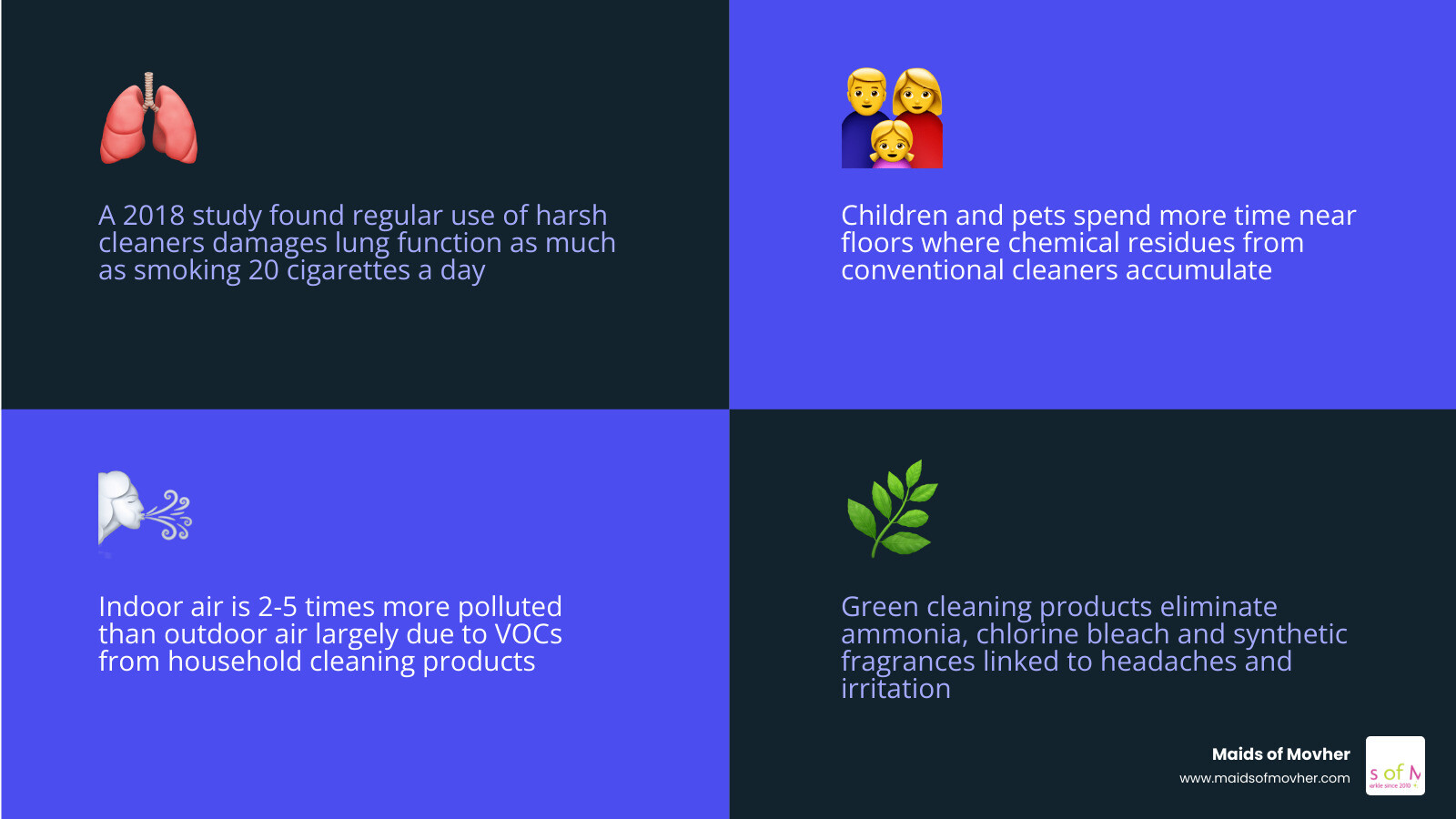
- Safer for children and pets – Kids and animals spend more time near floors and surfaces where chemical residues linger
- Cleaner indoor air – Indoor air is often 2-5 times more polluted than outdoor air, largely due to harsh cleaning chemicals
- Lower environmental impact – Biodegradable formulas break down safely without polluting waterways or soil
- Reduced toxic chemical exposure – No ammonia, chlorine bleach, or synthetic fragrances linked to headaches, skin irritation, and long-term health concerns
- Comparable cleaning performance – Advances in green chemistry mean eco-friendly products can match conventional cleaners on dirt, bacteria, and everyday grime
- Long-term value – Concentrated formulas reduce how much product you use and how often you restock
Here’s the bigger picture: a 2018 study published in the American Journal of Respiratory and Critical Care Medicine found that regular use of harsh cleaning chemicals can be as damaging to lung function as smoking 20 cigarettes a day. That’s not a small risk — that’s a daily exposure happening in the rooms where your family eats, sleeps, and plays.
Most of us reach for conventional cleaners out of habit, not because we’ve compared the evidence. But once you look at what’s actually in those products — and what they leave behind on surfaces, in the air, and eventually in local waterways — the case for making the switch becomes hard to ignore.
This guide walks you through everything you need to know: the health and environmental science, how to spot truly green products, whether they actually clean as well, and what best practices make the biggest difference.
I’m Sabrina Jones, owner of Maids of Movher and a home services professional with over a decade of experience helping Spokane-area families create cleaner, healthier living spaces — including knowledge of how the benefits of switching to green cleaning products play out in real homes every day. That hands-on experience shapes everything we cover in this guide, so you can make confident, informed choices for your household.
Health and Wellness: The Primary Benefits of Switching to Green Cleaning Products
When we think about cleaning, we usually think about removing dirt, dust, and grime to make our homes healthier. However, using conventional chemical cleaners often introduces a new set of health hazards. Many standard cleaning products rely on aggressive chemical agents to break down grease or sanitize surfaces. While they might leave a shiny countertop, they also leave behind invisible chemical residues and airborne irritants that can impact your family’s well-being.
One of the most immediate Healthy House Cleaning Washington benefits is the reduction of daily chemical exposure. Standard household cleaners frequently contain corrosive substances, synthetic fragrances, and strong artificial dyes. Over time, contact with these ingredients can lead to chronic skin irritation, frequent headaches, and unexplained fatigue. By transitioning to plant-based, non-toxic alternatives, you eliminate these unnecessary chemical burdens from your home environment.
Protecting Vulnerable Family Members and Pets
The health risks associated with traditional cleaning chemicals are not distributed equally. Children and household pets are far more vulnerable to these toxins than healthy adults. Because of their smaller body mass, faster metabolic rates, and developing organs, children process inhaled or ingested toxins much less efficiently.
Furthermore, think about how children and pets interact with your home. Toddlers spend hours playing on the living room rug, frequently putting their hands, toys, and household objects into their mouths. Cats and dogs walk across freshly mopped tile floors, absorbing residues directly through their paw pads, and later ingest those chemicals when they groom themselves.
Standard household cleaners often contain dangerous ingredients like:
- Phenols: Highly toxic to cats, who lack the specific liver enzymes required to process them safely.
- Phthalates: Commonly found in synthetic fragrances, these are known hormone disruptors that can affect reproductive health in both humans and animals.
- Ammonia: A highly corrosive chemical that can cause severe respiratory tract irritation and eye damage.
Making the switch to pet-safe, plant-derived ingredients ensures that your floors, carpets, and low surfaces remain safe zones. For a deeper look into selecting the right products for your furry companions, check out our Pet Friendly Cleaning Washington Guide and our comprehensive list of Animal Safe Cleaning Products Washington.

Improving Indoor Air Quality and Respiratory Health
Many people are surprised to learn that the air inside their homes is often 2 to 5 times more polluted than the air outside. A major culprit behind this statistic is the regular use of traditional cleaning products that release volatile organic compounds (VOCs). VOCs are gases emitted by certain solids or liquids, and they can linger in your indoor air long after you finish wiping down your counters.
Inhaling these compounds can trigger immediate respiratory distress, including coughing, throat irritation, and severe asthma attacks. For those with pre-existing allergies or chronic respiratory conditions, conventional cleaners can make staying indoors incredibly uncomfortable.
However, a common point of confusion is that even “green” cleaners can sometimes impact air chemistry. A prominent scientific study titled “Does green mean clean? Volatile organic emissions from regular versus green cleaning products” highlighted that green cleaners can actually emit higher average concentrations of monoterpenes (natural fragrance compounds like limonene) than conventional cleaners. When these natural monoterpenes react with ozone in the indoor air, they can generate secondary pollutants like formaldehyde.
To truly optimize your indoor air quality, the best approach is to select fragrance-free green products or use simple, unfragranced DIY solutions. If you want to learn how to keep your living spaces spotless without introducing these airborne irritants, read our guide on How to Clean Your House Without Harsh Chemicals or a Hazmat Suit.
Environmental and Commercial Advantages of Eco-Friendly Cleaning
The choices we make inside our homes in Spokane, Spokane Valley, Mead, Airway Heights, and Liberty Lake have a direct impact on our beautiful local ecosystem. When you rinse a conventional cleaner down the drain, those chemicals do not simply disappear; they enter the local wastewater system and can eventually find their way into our soil and local water bodies, including the Spokane River.
Reducing Chemical Runoff and Water Pollution
Conventional cleaning products are packed with synthetic surfactants, phosphates, and nitrogen. Surfactants help cleaners spread and penetrate dirt, but many of them biodegrade very slowly or break down into even more toxic sub-compounds that threaten aquatic life.
Phosphates and nitrogen act as nutrients in water systems. When high concentrations of these chemicals enter local rivers and lakes, they cause nutrient-loading, which fuels massive algae blooms. These blooms choke out native aquatic plants, deplete oxygen levels in the water, and devastate fish populations. By choosing biodegradable, phosphate-free green cleaners, you ensure that your household waste does not contribute to the degradation of our regional waterways.
Sustainable Packaging and Waste Reduction
The environmental footprint of a cleaning product is not just about what is inside the bottle; it is also about the bottle itself. The commercial cleaning industry uses billions of pounds of plastic packaging every year, much of which ends up in landfills.
Green cleaning brands prioritize sustainability across the entire lifecycle of their products. This includes:
- Concentrated Formulas: Shipping water is heavy and carbon-intensive. Concentrated green cleaners allow you to mix the product with tap water at home, dramatically reducing shipping emissions and packaging material.
- Refill Systems: Many modern green brands use reusable glass or durable plastic spray bottles paired with small refill cartridges, eliminating single-use plastics entirely.
- Recyclable and Biodegradable Materials: Eco-friendly packaging often utilizes post-consumer recycled (PCR) plastics or biodegradable cardboard.
To understand the full environmental breakdown between these options, explore our Natural vs Chemical Cleaning Products Comparison Guide.
Green Cleaning in Commercial Spaces, Schools, and LEED Buildings
The benefits of eco-friendly cleaning extend far beyond residential homes. Schools, offices, and commercial facilities in our Washington communities stand to gain immensely by implementing green cleaning programs.
In professional environments, indoor air quality directly correlates with occupant health and performance. Studies show that employees working in green-certified workplaces score up to 26% higher on cognitive function tests compared to those in conventional buildings. Additionally, cleaner indoor air leads to a measurable reduction in employee sick days, lowering absenteeism and boosting overall workplace morale.
For property managers and business owners, adopting green cleaning protocols is a crucial step toward achieving prestigious sustainability certifications. Both the LEED (Leadership in Energy and Environmental Design) and WELL Building Standard certifications award points and credits for using certified green cleaning products and maintaining strict indoor air quality standards. Furthermore, buildings that achieve LEED certification report a 25% improvement in occupant satisfaction and a 20% reduction in maintenance costs over time.
Efficacy and Best Practices: Do Green Cleaners Actually Work?
A lingering concern for many homeowners is whether green cleaning products can match the heavy-duty performance of conventional chemical cleaners. It is a fair question — after all, a product is not truly beneficial if it fails to clean your home effectively.
Fortunately, major advancements in green chemistry have closed the performance gap. Today’s green cleaners utilize plant-derived enzymes, natural acids, and biodegradable surfactants that break down grease, lift stains, and eliminate dirt just as effectively as synthetic alternatives.
| Cleaning Ingredient | Primary Action | Best Household Uses | Green Alternative To |
|---|---|---|---|
| White Vinegar | Mild acid, cuts grease, dissolves mineral deposits | Glass, mirrors, hard water stains, chrome fixtures | Ammonia-based glass cleaners |
| Baking Soda | Mild abrasive, natural deodorizer, lifts stains | Grout, sinks, ovens, carpet deodorizing | Harsh scouring powders |
| Citric Acid | Chelating agent, descaler, rust remover | Dishwashers, toilet bowls, shower heads | Strong mineral acids |
| Castile Soap | Plant-based surfactant, lifts dirt and oils | Floors, countertops, hand soap | Petroleum-based detergents |
Debunking Misconceptions About the Benefits of Switching to Green Cleaning Products
The most common myth is that a cleaner must smell incredibly strong or cause a slight throat tickle to be working. In reality, a strong chemical smell is simply a sign of synthetic fragrances or volatile ingredients — not cleanliness. Clean actually has no smell at all.
Another misconception is that natural ingredients like white vinegar, baking soda, and citric acid are only good for minor touch-ups. When used correctly, these simple kitchen staples can tackle incredibly tough cleaning challenges. For example, a paste of baking soda and water acts as a highly effective, scratch-free scouring agent for greasy ovens. For a comprehensive look at the best natural formulations, read our guide on Professional Grade and Planet Friendly: The Best Green Cleaners.
Best Practices to Maximize the Benefits of Switching to Green Cleaning Products
To get the absolute best results from your eco-friendly products, it helps to adjust your cleaning techniques slightly:
- Respect Contact Time: Because green cleaners do not rely on aggressive, corrosive chemicals to instantly burn away grime, they often need a few minutes of “dwell time” to break down grease or mineral deposits. Spray the surface and let it sit for 3 to 5 minutes before wiping.
- Follow Dilution Instructions: If you are using concentrated green products, follow the manufacturer’s dilution ratios precisely. Using too much concentrate can leave a sticky residue, while using too little will reduce its effectiveness.
- Use Microfiber Cloths: Microfiber cloths have millions of tiny fibers that physically grab and hold dirt, dust, and bacteria rather than just pushing them around. This mechanical cleaning action reduces your reliance on heavy chemical action.
- Establish a Routine: Regular, light cleaning with gentle green products prevents heavy grime buildup, eliminating the need to ever reach for harsh chemical emergency solutions.
For more practical tips on setting up an efficient green cleaning routine, check out our Ultimate Guide Green Home Cleaning Products.
How to Identify Truly Green Products and Avoid Greenwashing
As demand for eco-friendly products has surged, so has the practice of greenwashing — a marketing tactic where companies use vague, misleading, or unsubstantiated claims to make their products appear more environmentally friendly than they actually are. Terms like “natural,” “eco-friendly,” “earth-safe,” and “plant-derived” are not legally regulated on cleaning labels. A bottle covered in images of green leaves and flowers can still contain harmful synthetic fragrances, phthalates, and aquatic toxins.
The EPA only requires cleaning product manufacturers to disclose “chemicals of known concern” on their labels, meaning many ingredients remain hidden behind generic terms like “surfactants” or “fragrance.” To protect your family, you must look past the clever marketing and seek out verifiable proof. For a detailed breakdown of what to avoid, consult our Safe House Cleaning Products Washington Guide.
Key Certifications to Look For
The easiest way to avoid greenwashing is to look for reputable, independent third-party certifications on the product packaging. These organizations audit the entire lifecycle of a product — from ingredient sourcing to packaging and biodegradability — to ensure it meets strict environmental and health standards.
- EPA Safer Choice: This program, managed by the U.S. Environmental Protection Agency, identifies products with safer chemical ingredients that do not sacrifice performance.
- Green Seal: A non-profit organization that certifies products meeting rigorous science-based standards for human health, reduced environmental impact, and packaging sustainability.
- UL ECOLOGO: This certification verifies that a product has undergone stringent scientific testing to prove its reduced environmental impact.
- Greenguard: Primarily focuses on indoor air quality, certifying that a product meets extremely low chemical emission standards (VOCs).
Frequently Asked Questions About Green Cleaning
Are green cleaning products safe for all household surfaces?
While green cleaning products are generally much gentler than conventional chemicals, you still need to match the product to the material. For example, highly acidic natural ingredients like white vinegar, lemon juice, or citric acid should never be used on natural stone surfaces like granite, marble, or travertine, as the acid can etch the stone and ruin the finish.
For hardwood floors, always use a pH-neutral cleaner specifically formulated for sealed wood to avoid stripping away the protective polyurethane coating. Always check the label and test a small, inconspicuous area before applying any new cleaner to a delicate surface.
Can green cleaners disinfect against viruses and bacteria?
Yes, but it is important to understand the difference between cleaning (removing dirt and physical germs) and disinfecting (killing pathogens on a surface). Many everyday green cleaners are designed to lift and wash away bacteria and viruses mechanically.
If you need to sanitize or disinfect a surface — such as a cutting board after preparing raw meat or high-touch surfaces during flu season — look for EPA-registered green disinfectants that utilize botanical active ingredients like thymol (derived from thyme oil) or citric acid. These products kill 99.9% of pathogens without leaving toxic chemical residues behind.
How do green cleaning products save money in the long run?
While some specialty green products can carry a slightly higher upfront retail price, they offer substantial long-term savings:
- Concentrates: Purchasing concentrated green cleaners that you dilute with water at home drastically lowers your cost-per-use.
- Multipurpose Utility: Simple ingredients like white vinegar, baking soda, and Castile soap can replace dozens of specialized, single-purpose commercial cleaners.
- Asset Protection: Harsh chemical cleaners can corrode metal fixtures, dull floor finishes, and degrade grout over time. Gentle green cleaners extend the lifespan of your home’s surfaces and fixtures, preventing costly repairs and replacements.
Conclusion
Switching to green cleaning products is one of the simplest yet most impactful changes you can make for your household’s health, your pets’ safety, and the preservation of our gorgeous Inland Northwest environment. From safeguarding developing lungs to protecting the Spokane River, the positive ripple effects of going green are undeniable.
At Maids of Movher, we are proud to be a locally-owned, woman-owned residential cleaning company serving Spokane, Spokane Valley, Mead, Airway Heights, Liberty Lake, and the surrounding communities. Since 2010, our mission has been to brighten and bring some sparkle to our clients’ homes with superior service, integrity, commitment, and trust.
We believe that a clean home should also be a healthy home. That is why we emphasize eco-friendly cleaning practices, using safe, sustainable products that keep your family and pets safe from harsh chemical exposures. Our unique employee-first philosophy means we provide the highest wages in the area, ensuring our dedicated team is happy, consistent, and committed to delivering exceptional work on every visit.
We also believe in giving back to the community that supports us. Through our partnership with Cleaning for a Reason, we proudly provide free house cleaning services to local cancer patients, allowing them to focus on healing while we handle the hard work.
If you are ready to reclaim your weekends, enjoy a healthier home, and experience the peace of mind that comes with professional, eco-friendly care, we are here to help. Discover how we can make your home shine by exploring our Eco-Friendly Cleaning Services Washington today!
