
Your Home Looks Clean — But Is It Actually Healthy?
Eco friendly cleaning tips for your home are simpler than most people think — and they make a real difference for your family, your pets, and the planet.
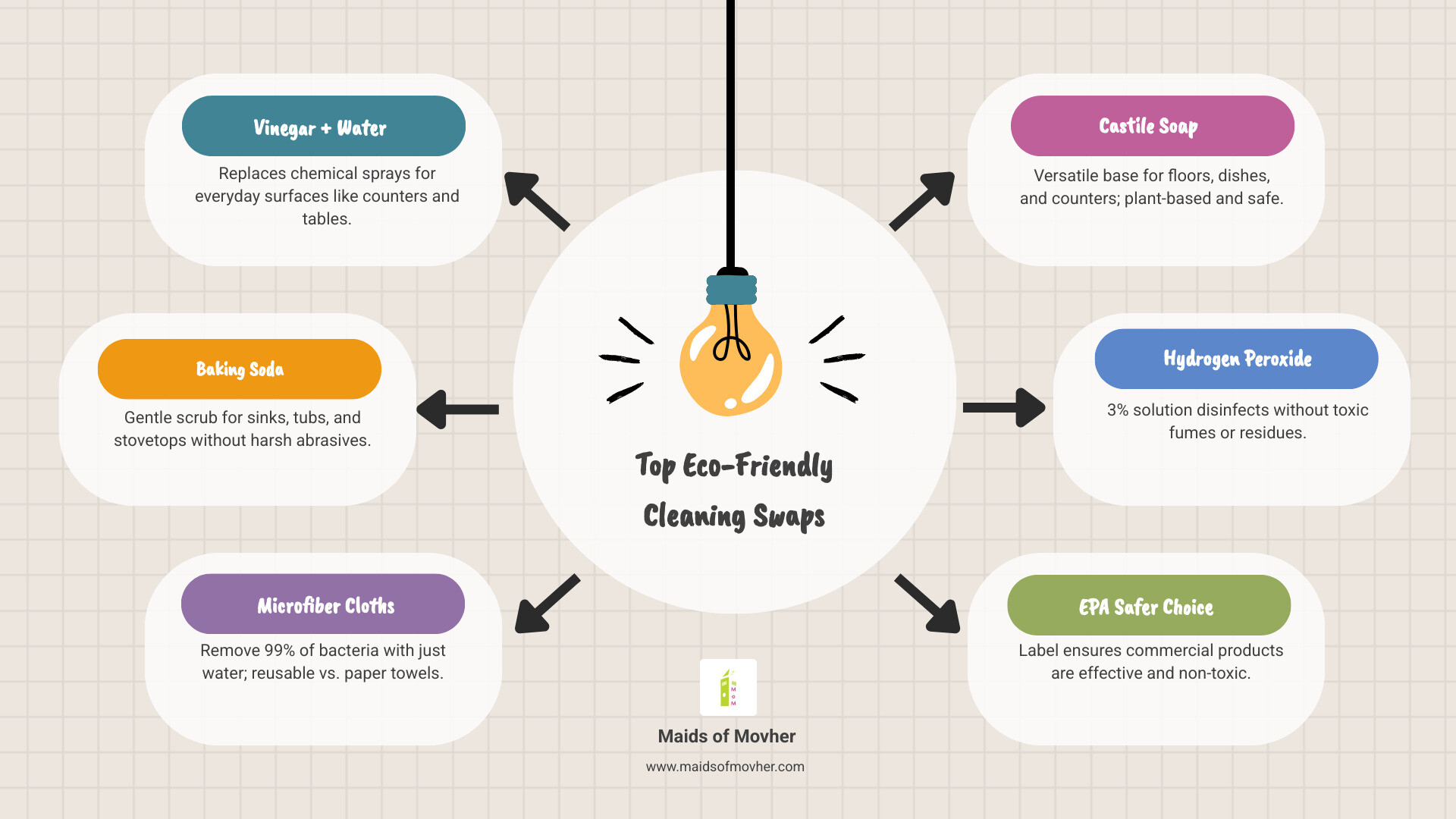
Here’s a quick overview of the most effective green cleaning swaps you can start today:
- Replace chemical sprays with a simple mix of white vinegar and water for everyday surfaces
- Use baking soda as a gentle scrub for sinks, tubs, and stovetops
- Swap paper towels for reusable microfiber cloths, which remove up to 99% of bacteria with just water
- Choose castile soap as a versatile base for floors, dishes, and counters
- Add hydrogen peroxide (3% solution) for disinfecting without toxic fumes
- Look for the EPA Safer Choice label when buying commercial products
- Ditch synthetic fragrances — they can contain hundreds of undisclosed chemicals
- Use refillable glass spray bottles to cut down on single-use plastic waste
- Take your shoes off at the door — shoe soles carry more than 140 times more bacteria than the inside of your shoes
- Open windows while cleaning to flush out airborne pollutants and improve indoor air quality
Most people spend around 90% of their time indoors, yet indoor air can be two to five times more polluted than the air outside — largely because of the conventional cleaning products sitting under the kitchen sink. Many popular sprays, scrubs, and scented detergents leave behind chemical residues that can irritate skin, trigger breathing problems, and disrupt hormones, especially in children and pets. The good news? You don’t need a chemistry degree or a hazmat suit to keep your home genuinely clean. Everyday pantry staples like vinegar, baking soda, and castile soap can replace most of what’s in your cleaning cabinet — and they work.
I’m Sabrina Jones, owner of Maids of Movher and a home services entrepreneur with over a decade of hands-on experience helping Spokane families maintain healthier, cleaner homes using eco friendly cleaning tips for your home that are safe, effective, and practical. In the sections ahead, I’ll walk you through everything you need to make the switch — from DIY recipes to room-by-room strategies.
Why Switch to Eco-Friendly Cleaning?
Making the switch to green cleaning isn’t just about being “trendy” in 2026; it’s a fundamental shift toward protecting the people and animals we love. Traditional cleaning supplies often contain Volatile Organic Compounds (VOCs), which evaporate into the air we breathe. These chemicals can lead to respiratory distress, headaches, and even long-term organ damage. Furthermore, many conventional surfactants and detergents act as hormone disruptors and aquatic toxins, meaning they don’t just stay in your home—they travel through our Spokane water systems and harm the local environment.
Protecting Your Family and Pets
Our little ones and furry friends spend a lot of time on the floor. When we use harsh chemicals, we leave behind invisible residues that can cause skin irritation or be ingested. Did you know that “fragrance” listed on a label can actually represent hundreds of undisclosed chemicals? These are common triggers for allergies and asthma. By choosing Animal Safe Cleaning Products Washington, you ensure that your home remains a sanctuary rather than a source of irritation. Non-toxic living starts with what you spray on your counters and mop onto your floors.
Environmental Impact and Sustainability
Sustainability is all about the “circular economy”—choosing products that have a minimal footprint from production to disposal. Conventional cleaners often come in single-use plastic bottles that can sit in landfills for centuries. In contrast, most plant-based compostable options or DIY solutions break down completely in about 90 days. By reducing plastic waste and avoiding chemicals that contaminate our waterways, we are doing our part to keep the Inland Northwest beautiful for generations to come.
The Essential Green Cleaning Toolkit
You don’t need an aisle full of specialized products to get a professional-grade clean. In fact, most of the best eco friendly cleaning tips for your home involve just a few versatile “foundation” ingredients.
- White Vinegar: A mild acetic acid that’s a powerhouse for cutting through grease, removing mineral deposits (limescale), and deodorizing.
- Baking Soda: Also known as sodium bicarbonate, this is a gentle abrasive that works wonders on “burnt-on” messes and neutralizes odors.
- Castile Soap: A plant-based soap (often made from olive oil) that is incredibly versatile. It can be used for everything from mopping floors to washing dishes.
- Citric Acid: Excellent for descaling kettles and cleaning toilet bowls without the harsh fumes of bleach.
For a deeper dive into what to stock, check out our Ultimate Guide Green Home Cleaning Products.
Reusable Tools to Replace Disposables
To truly embrace a green routine, we have to look at our tools.
- Microfiber Cloths: These are the MVPs of green cleaning. Their mechanical action captures tiny particles and bacteria that cotton rags might just push around.
- Swedish Dishcloths: Think of these as a hybrid between a sponge and a paper towel. They are super absorbent, quick-drying, and can be tossed in the dishwasher to sanitize.
- Bamboo Brushes and Natural Loofahs: These replace plastic sponges. Loofahs are actually related to cucumbers and are 100% compostable at the end of their life!
Understanding Eco-Friendly Certifications
If you aren’t ready to go full DIY, look for third-party certifications on store-bought items.
- EPA Safer Choice: This label means the EPA has reviewed every ingredient for human health and environmental safety.
- EWG Verified: Indicates the product meets the Environmental Working Group’s strictest standards for transparency and health.
- Leaping Bunny: Guarantees the product is cruelty-free and not tested on animals.
- EU Ecolabel: A rigorous standard that limits fragrance allergens and requires high levels of biodegradability.
Eco Friendly Cleaning Tips for Your Home: A Room-by-Room Guide
When we clean for our clients in Liberty Lake or Airway Heights, we follow a systematic approach. The two biggest secrets to green cleaning success are dwell time (letting the product sit) and mechanical action (using the right tool to scrub). Always work from top to bottom so you aren’t knocking dust onto surfaces you’ve already cleaned!
Eco friendly cleaning tips for your home: Kitchen and Bathroom
In the kitchen, grease is the main enemy. A mixture of castile soap and warm water is usually enough for daily wipes. For the bathroom, soap scum and limescale are the challenges.
- Toilet Descaling: Sprinkle citric acid or baking soda into the bowl, add a splash of vinegar, let it fizz, and wait at least 15 minutes before scrubbing.
- Garbage Disposals: Grind up ice cubes and lemon rinds to scrub the blades and leave a fresh scent.
- Soap Scum: Spray undiluted white vinegar on shower doors, let it sit for 20 minutes, and wipe clean with a microfiber cloth.
For more room-specific advice, see our Safe House Cleaning Products Washington Guide.
Eco friendly cleaning tips for your home: Floors and Windows
Floors and windows require a gentle touch to avoid damage or streaks.
- Hardwood Care: Never use straight vinegar on finished wood, as the acid can eat away at the finish over time. Instead, use a very diluted castile soap solution (about 1 tablespoon per gallon of water) and a barely damp mop.
- Natural Stone: Avoid vinegar and lemon at all costs! Use pH-neutral castile soap to prevent etching on marble or granite.
- Streak-Free Windows: The secret is using distilled water in your vinegar mix. Tap water contains minerals that leave spots behind. Buff with a dry microfiber cloth or even old newspaper for a lint-free finish.
| Feature | Microfiber Cloths | Paper Towels |
|---|---|---|
| Bacteria Removal | Up to 99% (mechanical action) | Minimal |
| Sustainability | Reusable (hundreds of washes) | Single-use waste |
| Cost | Low (long-term investment) | High (recurring expense) |
| Best Use | Dusting, windows, disinfecting | One-off spills/messes |
Simple DIY Recipes for a Chemical-Free Sparkle
Why buy ten different bottles when you can make what you need with pantry staples? Adding a few drops of essential oils like lemon, lavender, or tea tree can provide a natural antimicrobial boost and a lovely scent.
Essential Formulas for Every Surface
- All-Purpose Surface Spray: Mix 1 part white vinegar with 3 parts distilled water. Add 10 drops of lemon essential oil. (Note: Do not use on stone).
- Glass and Mirror Cleaner: Mix 1 cup distilled water, 1 cup white vinegar, and 1/4 cup rubbing alcohol (for fast drying).
- Floor Solution (Tile/Vinyl): Mix 1/2 cup white vinegar into a gallon of hot water with a drop of plant-based dish soap.
- Natural Disinfectant: Use 3% hydrogen peroxide in a spray bottle. Spray, let sit for 10 minutes, and wipe. (Keep this in an opaque bottle as light breaks down peroxide).
Deep Cleaning and Deodorizing Hacks
- The “Magic” Oven Paste: Mix 1/2 cup baking soda with a few tablespoons of water to make a paste. Spread it over the oven interior (avoid the heating elements) and let it sit overnight. In the morning, wipe it away with a damp cloth and a spritz of vinegar to remove any residue.
- Drain Freshener: Pour 1/2 cup baking soda down the drain, followed by 1/2 cup vinegar. Let it fizz for 15 minutes, then flush with a kettle of boiling water.
- Carpet Powder: Mix 1 cup baking soda with 10 drops of lavender oil. Sprinkle on carpets, let sit for 30 minutes, and vacuum up odors.
- Simmering Potpourri: Instead of chemical air fresheners, simmer a pot of water on the stove with apple slices, cinnamon sticks, and orange peels.
Avoiding Common Green Cleaning Mistakes
Even natural ingredients require respect. Being “eco-friendly” doesn’t mean “completely harmless if misused.”
Dangerous Chemical Combinations
- NEVER mix Vinegar and Bleach: This creates toxic chlorine gas, which can be fatal. Even if you are switching from a chemical routine to a green one, ensure surfaces are thoroughly rinsed before applying a new product.
- NEVER mix Hydrogen Peroxide and Vinegar: Combining these in the same bottle creates peracetic acid, which is highly corrosive and can irritate your lungs and skin.
- Ventilation is Key: Even when using natural cleaners, open your windows! Fresh air is the best disinfectant and helps clear out any lingering odors or particles.
Protecting Delicate Household Surfaces
- Acidic Damage: Vinegar and lemon are wonderful, but their acidity will etch (dull) natural stone like marble, limestone, and travertine.
- Finished Wood: Excessive water or acid can damage wood finishes. Always use a “damp” rather than “wet” mopping technique.
- The “Test Spot” Rule: Before applying any new DIY cleaner to a visible area, test it on a small, hidden spot to ensure it doesn’t cause discoloration.
Frequently Asked Questions about Green Cleaning
Is eco-friendly cleaning as effective as traditional chemicals?
Absolutely. In fact, many plant-based surfactants are designed to biodegrade 90% faster than petroleum-based versions while still lifting dirt effectively. A 2019 study showed that EPA Safer Choice products removed 94% of test soils, nearly matching the 96% of conventional cleaners. The main difference is dwell time—green products often need an extra five minutes to work their magic since they aren’t using harsh solvents to “melt” the grime instantly.
How long do homemade cleaning solutions last?
Because DIY cleaners don’t contain synthetic preservatives, they have a shorter shelf life. Water-based mixes (like vinegar and water) are best used within 2–4 weeks. To extend this, use distilled water and add a teaspoon of rubbing alcohol as a “preservation booster.” Vinegar-only solutions can last up to a year.
How do I safely dispose of old chemical cleaners?
When you make the switch, don’t just pour old bleach or ammonia down the drain—this can damage septic systems and contaminate our local Spokane groundwater. Instead, contact a local Household Hazardous Waste facility. In the Spokane area, the North County and Valley Transfer Stations often have designated days for chemical disposal.
Conclusion
At Maids of Movher, we believe that a clean home should be a healthy home. As a locally-owned and woman-owned business, we’ve been Making Homes Sparkle Since 2010 across Spokane, Spokane Valley, Mead, and Liberty Lake. Our employee-first philosophy means our team is happy, well-paid, and dedicated to providing consistent, reliable service. We treat every home with the same integrity and care we’d give our own—and that includes using safe, sustainable practices.
Whether you’re looking for a one-time deep clean or recurring Eco Friendly Cleaning Services Washington, we’re here to help you get your weekends back. Beyond cleaning, we are proud partners with Cleaning for a Reason, providing free services to local cancer patients because we believe in giving back to the community that supports us.
Ready to ditch the hazmat suit and embrace a fresher, greener home? Let us bring the sparkle back to your space while you catch up on life. Contact us today to see how we can make your home shine!
