
Why Getting Red Wine Stains Out of Fabric Feels Impossible — And What Actually Works
Getting red wine stains out of fabric is one of the most urgent household emergencies you’ll face — and how you respond in the first few minutes makes all the difference.
Here’s a quick answer if you need it right now:
- Blot immediately — use a clean white cloth or paper towels; never rub
- Flush from the back — run cold water through the reverse side of the fabric to push the stain out
- Apply a pretreatment — dish soap mixed with hydrogen peroxide (3:1 ratio) works well on most washable fabrics
- Let it dwell — leave the treatment on for 15–30 minutes before rinsing
- Check before you dry — never put a stained garment in the dryer; heat permanently sets the stain
Red wine is essentially a bottle of natural dye. Its chromogens and tannins bond to fabric fibers within minutes of contact, which is why that slow-motion spill across a white tablecloth feels so catastrophic. Acting within the first 15 minutes significantly increases your chances of full removal — but even dried or set-in stains are often recoverable with the right approach.
This guide walks you through everything: the science, the step-by-step methods, which household items actually work, and how to handle different fabric types safely.
I’m Sabrina Jones, owner of Maids of Movher and a home cleaning professional with over a decade of hands-on experience in Spokane — and getting red wine stains out of fabric is one of the most common questions my team fields from clients. From tablecloths to upholstery, I’ve seen what works and what makes things worse, and I’m sharing all of it here.
Quick getting red wine stains out of fabric terms:
The Science Behind Getting Red Wine Stains Out of Fabric
To defeat your enemy, you must first understand it. Red wine stains are notoriously stubborn because of their complex chemical makeup. Red wine contains three primary culprits: chromogens, tannins, and acids.
Chromogens are highly pigmented chemical compounds that give red wine its deep, beautiful color. Tannins are organic substances found in grape skins, seeds, and stems. In the textile industry, tannins are actually used as natural mordants—substances that help dyes bind permanently to fabric fibers. When you spill red wine, you are essentially pouring a high-quality, professional-grade textile dye directly onto your clothes.
The red and purple pigments in wine are called anthocyanins. These compounds are highly sensitive to pH levels. If you apply an alkaline substance (like standard bar soap) to a red wine stain, you might notice it immediately shifts from red to an alarming blue, green, or dark purple. This chemical reaction occurs because the change in pH alters the structure of the pigment molecules. To break these pigments down effectively without locking them into the fabric, you need to use cleaning agents that target their specific chemistry.
Another critical scientific concept to understand is thermal fixation. When synthetic fibers (like polyester or nylon) are exposed to high heat, they reach what is known as their glass transition temperature—often around 70°C (158°F). At this temperature, the synthetic polymer chains loosen and expand. If red wine pigments are present on the fiber, they slip deep inside the molecular structure. As the fabric cools, the fibers contract and permanently trap the pigment molecules inside.
For natural cellulose fibers like cotton and linen, heat causes the wine’s sugars and pigments to form covalent bonds with the fibers, rendering the stain nearly impossible to remove. This is why putting a stained garment into a hot dryer or running an iron over it is the single biggest mistake you can make.
Understanding the balance between natural and chemical treatments is key to keeping your home and wardrobe pristine. If you want to dive deeper into how different cleaning products interact with surfaces, check out our Natural vs Chemical Cleaning Products Comparison Guide.
Immediate Action: What to Do When a Spill Happens
The first 15 minutes after a spill are your golden window of opportunity. The moment that glass of Cabernet tips over on your living room rug, your immediate reaction determines whether you will easily lift the spot or live with a permanent pink shadow.
The Golden Rule: Blot, Never Scrub
When wine hits fabric, it naturally moves in two directions: downward into the fibers and outward across the surface. If you grab a towel and start scrubbing vigorously, you are doing two highly destructive things:
- You are pushing the liquid deeper into the core of the fabric or carpet pad.
- You are spreading the pigment outward, transforming a small, manageable spot into a massive stain.
Instead, grab a clean, dry white microfiber cloth or paper towel. Press down firmly on the spill and hold it there to siphon up as much liquid as possible. Gently lift, move to a dry section of the towel, and press down again. Work from the outside edges of the spill inward to prevent it from spreading.
The Cold Water Flush
Once you have blotted up the excess liquid, the next step for washable garments is the cold water flush. Take the fabric and turn it inside out. Hold the stained area directly under a faucet running with cold water, ensuring the water runs through the back of the stain. This pushes the wine pigments out the way they came in, rather than forcing them deeper through the fabric. Never use hot water at this stage, as heat will begin to cook the proteins and set the pigments.
Debunking the Salt and Club Soda Myths
For generations, Grandma’s go-to advice for a red wine spill was to dump a mountain of table salt on it. While salt does absorb moisture, it is a highly inconsistent and risky method. As the salt absorbs the liquid, it can dehydrate the stain too quickly, locking the remaining pigments into the fibers. Furthermore, salt crystals are abrasive and can damage delicate fibers if rubbed.
Club soda is another classic remedy. While the carbonation can help lift fresh pigments to the surface, plain cool water works just as well. There is no need to panic if you don’t have club soda on hand—simply reach for tap water.
If the spill occurred on your living room carpet rather than your favorite shirt, the stakes are even higher. To prevent the liquid from soaking into your carpet backing and causing long-term odors, read our complete guide on How to Get Stains Out of Carpet Effectively.
Critical Mistakes to Avoid:
- Don’t use hot water: Heat acts as a setting agent for tannin-based stains.
- Don’t scrub: Friction damages delicate fibers and spreads the pigment.
- Don’t let it dry: A dry stain is significantly harder to remove than a wet one.
- Don’t use colored napkins: The dyes in colored paper or cloth napkins can transfer to your stained garment, creating a secondary stain.
- Don’t use white wine: This popular myth suggests white wine dilutes red wine. In reality, you are just adding more liquid, sugar, and acid to the fabric, which can make the ultimate cleanup much harder.
Emergency Steps for Getting Red Wine Stains Out of Fabric on the Go
We’ve all been there: you’re enjoying a wonderful dinner at a restaurant in downtown Spokane or visiting a winery in Liberty Lake, and a stray splash of Syrah lands right on your lap. You can’t exactly strip down and run your clothes under a faucet. Here is your emergency on-the-go protocol:
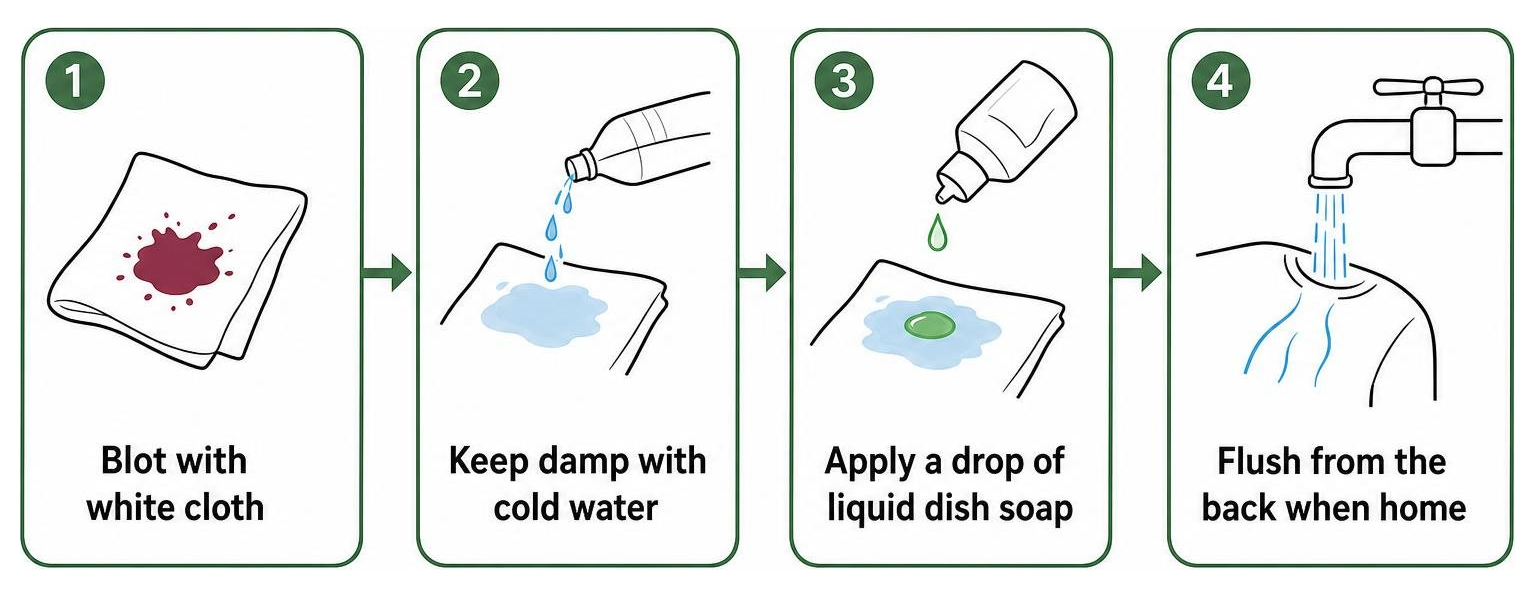
- Ask for a clean white cloth or white paper napkins. Avoid colored napkins at all costs.
- Blot the spill firmly. Do not rub. Press down to transfer as much wine as possible to the napkin.
- Dampen a clean corner of the cloth with cold water. Gently dab the spot to dilute the remaining wine.
- Ask the staff for a drop of clear liquid dish soap. Dab a tiny amount onto the damp spot. The surfactants in the dish soap will help keep the pigments suspended in the water, preventing them from bonding with the fibers.
- Keep the stain damp. If the fabric dries completely before you get home, the stain will set. Gently dab it with a wet cloth occasionally to keep it moist until you can treat it properly.
Step-by-Step Methods for Fresh vs. Dried Stains
Whether you are dealing with a spill that happened two minutes ago or a dried spot you discovered the morning after a dinner party, there is a reliable way to salvage your fabric.
Treating Fresh Red Wine Stains
If the stain is still wet, you have a very high probability of completely removing it on the first try using simple household items.
- Blot immediately using the technique described above to remove excess liquid.
- Flush the fabric from the back with cold water.
- Apply liquid laundry detergent or a mixture of dish soap and cold water directly to the stain. Gently work it into the fibers with your fingers or a soft-bristled brush (use a gentle “tamping” motion rather than scrubbing).
- Let it sit for 10 to 15 minutes to allow the surfactants to break down the wine pigments.
- Wash the garment in cold water on a standard cycle.
- Inspect the garment while wet. If you see even a faint shadow of the stain, do not put it in the dryer. Repeat the process or move on to the dried stain method.
Treating Dried or Set-In Red Wine Stains
If you woke up to find a dried, purplish-brown spot on your tablecloth or jeans, don’t despair. You can disrupt the chemical bonds of a set-in stain by rehydrating the fibers first.
- Rehydrate the stain: Apply a small amount of pure vegetable glycerin to the dried spot. Let it sit for up to two hours. This humectant draws moisture back into the dried fibers, loosening the trapped pigment molecules.
- Mix your cleaning agent: Create a solution of three parts 3% hydrogen peroxide and one part liquid dish soap.
- Apply and dwell: Dab the mixture generously onto the rehydrated stain. Let it sit (dwell) for 15 to 30 minutes. You will likely see the stain begin to fade almost immediately as the hydrogen peroxide oxidizes the pigments.
- Flush with cool water: Rinse the area thoroughly from the back of the fabric.
- Launder: Wash the garment using an enzyme-rich laundry detergent on a cold cycle.
For more natural, eco-friendly approaches to handling tough spots around the house, check out our guide on DIY Natural Cleaning Solutions 101.
Fresh vs. Dried Stain Treatments
| Feature | Fresh Stains | Dried / Set-In Stains |
|---|---|---|
| Primary Goal | Prevent pigments from bonding to fibers | Rehydrate fibers and oxidize locked-in pigments |
| First Step | Blot excess liquid immediately | Rehydrate with vegetable glycerin for 2 hours |
| Best Cleaning Agent | Cold water + liquid dish soap or laundry detergent | 3% hydrogen peroxide + dish soap (3:1 ratio) |
| Dwell Time | 10–15 minutes | 15–30 minutes |
| Water Temperature | Cold water only | Cool to lukewarm water |
| Success Rate | Very high (usually 1 cycle) | High (may require 2–3 cycles) |
Getting Red Wine Stains Out of Fabric Using Household Items
You don’t need to run to the store for expensive specialty chemicals to save your fabrics. Some of the most effective stain-lifting agents are already sitting in your pantry or laundry room.
- White Vinegar: The acetic acid in white vinegar is highly effective at neutralizing the pigments in red wine. If you are working with colored fabrics where hydrogen peroxide might be too risky, white vinegar is an excellent alternative. Mix equal parts white vinegar and water, dab it onto the stain, let it sit for 20 minutes, and flush with cool water.
- Baking Soda Paste: For sturdier fabrics like heavy cotton or linen, baking soda works wonders. Mix three parts baking soda with one part water to form a thick paste. Apply the paste directly to the damp, blotted stain and let it dry completely (about 15 to 20 minutes). As the paste dries, it draws the wine pigments out of the fabric. Vacuum or brush off the dry paste, then wash the item in cold water.
- Sodium Percarbonate (Oxygen Bleach): Often sold as a powdered oxygen booster (like OxiClean), sodium percarbonate is an incredibly effective, eco-friendly cleaning agent. When dissolved in warm water, it breaks down into hydrogen peroxide and sodium carbonate. It releases active oxygen that safely lifts organic stains without weakening fabric fibers or stripping colors like chlorine bleach does. Soak your stained item in a mixture of warm water and oxygen bleach for at least 30 minutes (or up to overnight) before laundering.
If you enjoy keeping your home clean without relying on chemical-heavy commercial products, you’ll love our guide on How to Clean Your House Without Harsh Chemicals or a Hazmat Suit.
Fabric-Specific Care: From Cotton to Delicate Silk
Different fabrics require vastly different care. What works perfectly on a durable cotton dishcloth could completely ruin a delicate silk blouse or wool sweater.
Cotton and Linen
These natural, plant-based fibers are highly absorbent, meaning they pull red wine deep into their core very quickly. However, they are also quite durable and can handle stronger treatments.
- Safe treatments: Baking soda paste, vinegar, hydrogen peroxide (on light colors), and sodium percarbonate.
- Pro-tip: You can use Martha Stewart’s highly rated 6-step method on sturdy white cottons. This involves spraying with a dishwashing-soap solution, applying vinegar, using hydrogen peroxide, adding a drop of diluted ammonia, treating with an enzyme detergent, and washing with color-safe bleach.
Polyester and Synthetics
Synthetic fabrics are less absorbent than natural fibers, so the wine usually sits near the surface initially. However, they are highly susceptible to thermal fixation.
- Safe treatments: Dish soap, laundry detergent, and oxygen-based bleaches.
- What to avoid: Never use chlorine bleach on polyester, as it can strip optical brighteners and leave a permanent yellow stain. Never use high heat or iron the garment if any trace of the stain remains.
Silk, Wool, and Velvet
These are protein-based, highly delicate fibers. They are extremely sensitive to high pH levels (alkaline substances) and strong oxidizers.
- What to avoid: Never use hydrogen peroxide, ammonia, baking soda, or harsh enzyme detergents on silk or wool. These substances can degrade the protein fibers, causing thinning, yellowing, or holes. Keep the pH of your cleaning solutions neutral (between 6.0 and 7.5).
- Safe home treatment: Blot immediately and flush with plain cold water. You can use a very mild, pH-neutral wool wash or specialty silk detergent.
- When to call a pro: If the stain does not lift with a gentle cold-water flush, take the item to a professional dry cleaner as soon as possible. Let them know exactly what caused the stain and that you haven’t applied harsh chemicals to it.
Upholstery and Carpet
Because you cannot throw your couch or living room carpet into the washing machine, treating these surfaces requires a controlled moisture approach.
- The risk: If you use too much water, you will create unsightly water rings as the liquid dries and migrates outward. Excess moisture can also seep into carpet padding or sofa cushions, leading to mold and mildew.
- The method: Blot the spill thoroughly. Apply a mixture of one teaspoon of dish soap and one cup of cool water using a clean white cloth. Blot, don’t scrub. To prevent water rings, dry the area quickly after cleaning by using a handheld hair dryer on a cool setting, blowing from the outer edges of the damp spot inward.
If you have furry family members running around your home, you know that pet safety is just as important as stain removal. Learn how to keep your home clean and safe for your pets with our Pet Friendly Cleaning Washington Guide.
Frequently Asked Questions About Red Wine Stains
Can you remove a red wine stain after it has been through the dryer?
Yes, but it requires patience. When a garment goes through the dryer, the heat causes thermal fixation, locking the pigments into the fibers. To break these bonds, you must rehydrate the stain first. Saturate the area with pure vegetable glycerin and let it sit for two hours to loosen the fibers. Next, apply a 3:1 mixture of hydrogen peroxide and dish soap, let it sit for 30 minutes, rinse with cold water, and wash with an enzyme-rich detergent. You may need to repeat this process two or three times before the stain fully disappears.
Is hydrogen peroxide safe to use on colored fabrics?
Standard 3% household hydrogen peroxide is a mild oxidizing agent and is generally safe for colorfast fabrics. However, it can act as a mild bleaching agent on some unstable dyes. Always perform a quick colorfastness test: apply a drop of hydrogen peroxide to an inconspicuous area, such as an inside seam or hem. Wait 10 minutes, blot with a white cloth, and check for any dye transfer or color fading. Do not use hydrogen peroxide on silk, wool, or indigo-dyed denim.
Does pouring white wine on a red wine stain actually work?
No, this is a persistent household myth. White wine does not possess any magical chemical properties that neutralize red wine pigments. Pouring white wine on a red wine spill simply dilutes the stain, which you can achieve much more cleanly and effectively with plain cold water or club soda. In fact, adding white wine introduces more sugars and acids to the fabric, which can attract dirt and make the ultimate cleanup more difficult.
Enjoy Your Wine, We’ll Handle the Rest
Accidents happen, but a spilled glass of red wine doesn’t have to mean the end of your favorite dress, tablecloth, or living room rug. By acting quickly, blotting instead of scrubbing, and using the right science-backed household remedies, you can keep your fabrics looking pristine.
At Maids of Movher, we believe your home should be a place of comfort, relaxation, and joy—not a source of stress over spills and chores. As a locally-owned and woman-owned residential cleaning company, we have been proudly serving Spokane, Spokane Valley, Mead, Airway Heights, Liberty Lake, and the surrounding Washington communities since 2010.
Our mission is simple: to brighten and bring some sparkle to our clients’ homes with superior service, integrity, commitment, and trust.
What truly sets us apart is our employee-first philosophy. We are proud to provide the highest wages in the area, offering our team stable, rewarding careers without requiring them to work nights or weekends. Because our employees are happy, respected, and well-compensated, they stay with us long-term. This translates directly to consistent, reliable, and exceptionally high-quality service for you.
We are also deeply committed to our community. Through our proud partnership with Cleaning for a Reason, we provide free house cleaning services to local cancer patients, giving them a clean, comfortable environment to rest and heal.
Whether you need recurring cleaning services (weekly, bi-weekly, or monthly) to reclaim your weekends, a deep cleaning service to refresh your space, or a seamless move-in/move-out clean, we use safe, eco-friendly cleaning practices that protect your family and your pets.
Ready to spend your weekends enjoying Spokane’s beautiful wineries instead of scrubbing floors? Explore our professional cleaning checklists and request your free cleaning estimate today. Let us make your home sparkle!
