
Why Acting Fast Is Everything When It Comes to Household Stains
How to remove common household stains is one of those things that sounds simple until you’re standing over a red wine spill on your favorite chair at 9 PM, wondering if you’re about to ruin it forever. The good news? Most stains — blood, coffee, grease, ink, pet accidents — can be fully removed if you know what to do and, more importantly, how fast to do it.
Here is a quick-reference guide to get you started:
- Act immediately – Fresh stains are dramatically easier to remove than set-in ones.
- Blot, don’t rub – Rubbing spreads the stain and pushes it deeper into the fibers.
- Use cold water first – Hot water can permanently set protein-based stains like blood.
- Match your method to the stain type:
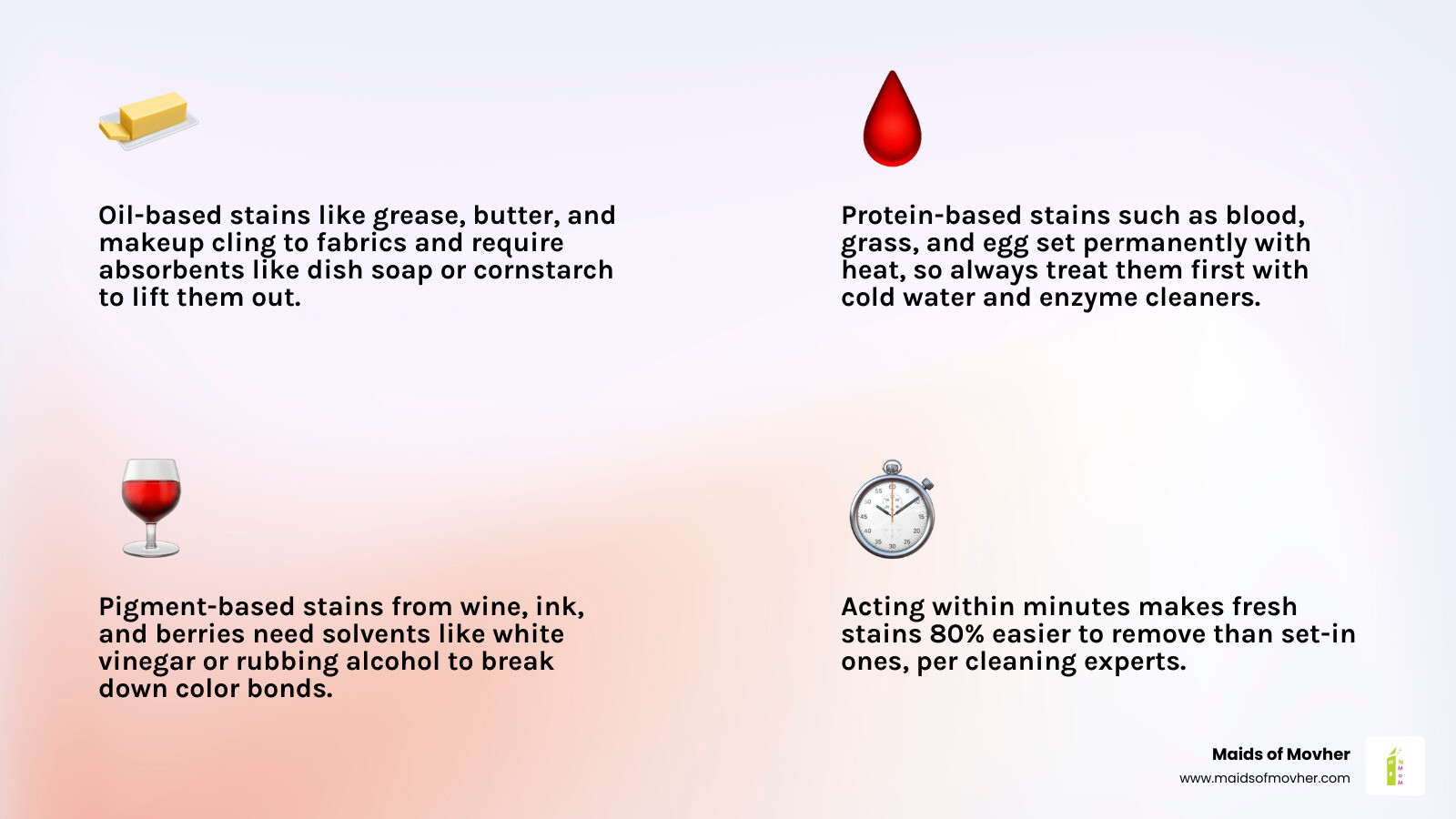
- Oil-based (grease, butter, makeup): Use dish soap or cornstarch to absorb and lift.
- Protein-based (blood, grass, egg): Use cold water and an enzyme-based cleaner.
- Pigment-based (wine, ink, berries): Use a targeted solvent like white vinegar or rubbing alcohol.
- Never put a stained item in the dryer – Heat permanently bonds stains to fabric.
- Test any solution first on a hidden area of the fabric before treating the full stain.
The American Cleaning Institute confirms that speed is one of the two most critical factors in successful stain removal — the other being having the right product on hand. Whether you’re dealing with a splatter on the couch or a mystery mark on the carpet, this guide walks you through exactly what to do, surface by surface and stain by stain.
I’m Sabrina Jones, owner of Maids of Movher, and with over a decade of professional home cleaning experience in Spokane, I’ve seen just about every stain imaginable — and helped homeowners recover from most of them. Understanding how to remove common household stains is something my team lives every day, and I’m excited to share what actually works.
The Golden Rules: How to Remove Common Household Stains
When a spill happens in your Spokane home, panic is your worst enemy. We always tell our clients that the secret to a sparkling home isn’t just about the deep cleans we provide; it’s about the “triage” you perform in the moments after an accident.
The first rule of stain removal is blotting. When you see a liquid spill on your carpet or upholstery, grab a clean, white cloth or paper towel. Press down firmly to soak up as much liquid as possible. Never, ever rub. Rubbing creates friction and heat, which can fray the fibers of your carpet and push the pigment deeper into the backing.
Another key principle is using cold water for the initial flush. Many common household stains, like blood or dairy, are protein-based. If you hit them with hot water, you effectively “cook” the protein into the fabric, making it nearly impossible to remove.
We also recommend the outside-in technique. Start cleaning at the outer edges of the stain and move toward the center. This prevents the “halo effect,” where the stain spreads outward and leaves a larger ring than the original spill.
While you’re working on keeping your surfaces pristine, don’t forget that moisture can lead to other issues. You can Keep the Fuzz Away with These Mold Prevention Hacks to ensure your home stays healthy after you’ve dealt with liquid spills.
Finally, always spot test. Even if a remedy is “natural,” it can still react with the dyes in your specific rug or blouse. Apply your cleaning solution to a hidden area (like the inside of a hem or under a sofa cushion) and wait a few minutes to ensure no color transfer occurs.
Avoiding Common Mistakes
In our years of cleaning homes in Spokane Valley and Liberty Lake, we’ve seen well-intentioned homeowners accidentally turn a temporary smudge into a permanent fixture. The biggest culprit? The clothes dryer. If you wash a stained shirt and the mark is still there, do not put it in the dryer. The high heat will “set” the stain forever. Instead, let it air dry, then treat it again.
Another mistake is mixing chemicals. Never combine bleach and ammonia; the resulting fumes are toxic. We also see people getting too aggressive with scrubbing. If you’re dealing with delicate fibers, a soft toothbrush is a much better tool than a stiff-bristled scrub brush. To help maintain your home’s surfaces between professional visits, you might want to learn Stop Scrubbing Daily: How to Keep Your Bathroom Clean Longer.

Essential Pantry Staples for DIY Stain Removal
You don’t need a cabinet full of expensive, harsh chemicals to master how to remove common household stains. In fact, some of the most effective tools are already in your kitchen in Spokane.
- White Vinegar: This is our favorite all-purpose wonder. Its acidity helps break down alkaline stains and works beautifully on everything from hard water spots to salt stains on shoes.
- Baking Soda: A natural deodorizer and mild abrasive. It’s perfect for absorbing oils and lifting odors out of carpets.
- Lemon Juice: A natural bleaching agent. It works wonders on mildew and rust stains, especially when combined with sunlight.
- Dish Soap: Specifically, clear liquid dish soap. It is engineered to break down grease and oil, making it the ultimate pre-treater for food spills.
- Hydrogen Peroxide: A mild oxygen-based bleach. It is highly effective on organic stains like blood or wine, but use it carefully on dark colors.
- Club Soda: The carbonation helps lift stains out of fibers before they can bond.
- Cornstarch or Salt: These are excellent for “drawing out” fresh liquid or grease from a surface.
Knowing how to use these items can save you a lot of stress. For example, if you’re cleaning more than just fabric, you can use these staples to follow our guide on Grout Expectations: The Best Ways to Clean Your Bathroom Tile.
Safe Alternatives to Harsh Chemicals
For those of us in the Inland Northwest who prefer eco-friendly living, specialized “green” products are a great choice. Oxygen bleach (like OxiClean) is a much safer alternative to chlorine bleach. It uses oxygen bubbles to break apart stain molecules without damaging the environment or your lungs.
Enzyme cleaners are another must-have, especially for pet owners in Airway Heights. These cleaners contain live bacteria cultures that literally “eat” organic matter like urine or vomit, removing the odor at a molecular level rather than just masking it.
For ink or sticky residues, rubbing alcohol is a miracle worker. It acts as a solvent that dissolves the oils in ink. If you’re tackling glass surfaces, you can How to Get Crystal Clear Shower Doors Every Single Time using simple, safe solutions.
A Step-by-Step Guide to Specific Fabric Messes
When treating clothing, the “flush” method is essential. Instead of applying a cleaner and rubbing it in, turn the garment inside out and run cold water through the back of the stain. This pushes the particles out of the fibers rather than deeper into them.
Treatment Comparison: Fresh vs. Old Stains
| Stain Type | Fresh Treatment | Old/Set-In Treatment |
|---|---|---|
| Blood | Flush with cold water immediately. | Soak in warm water with an enzyme detergent for 30+ mins. |
| Coffee/Tea | Blot and flush with cold water. | Soak in a solution of vinegar and water; apply enzyme pre-treater. |
| Grease | Cover with cornstarch to absorb. | Apply dish soap directly; scrub with a toothbrush; wash in hot water. |
| Wine | Blot and cover with salt or club soda. | Use a mix of hydrogen peroxide and dish soap; let sit for hours. |
| Ink | Blot with rubbing alcohol. | Saturate with hairspray or alcohol; soak in milk overnight. |
How to remove common household stains like blood and wine
Blood and wine are the “big two” that strike fear into homeowners. For blood, the golden rule is: Stay Cold. Cold water, cold soak, cold rinse. If the stain is stubborn, a paste of salt and cold water can help lift the pigment. For dried blood, an enzyme-based laundry detergent is your best friend.
For wine, speed is paramount. Blot up as much as you can. A popular “pro” trick is the boiling water method for tablecloths: stretch the fabric over a bowl and pour boiling water through it from a height of about a foot. The pressure and heat of the water can force the wine right out of the fibers. (Note: Only do this for sturdy fabrics like cotton or linen!). If you’re dealing with stains in the bathroom, check out The Ultimate Homeowner Guide to a Sparkling Bathroom for more surface-specific tips.
Tackling grease and ink: How to remove common household stains from clothes
Grease is an oil-based stain, meaning water alone won’t touch it. You need a surfactant. Clear dish soap is designed to latch onto grease molecules and pull them away from the surface. Rub a little into the spot, let it sit for 10 minutes, and then wash.
Ink is a tricky one. For ballpoint pen, rubbing alcohol or a high-alcohol hairspray usually does the trick. Place a paper towel under the stain and dab the alcohol onto the spot; you’ll see the ink transfer onto the paper towel. For felt-tip pens, you might need a longer soak in a detergent and ammonia solution. If managing these chores feels like too much, you can learn Everything You Need to Know About Recurring Bathroom Cleaning Services to see how a professional team can take the weight off your shoulders.
Treating Stains on Specialized Household Surfaces
Not every stain happens on a t-shirt. In Mead and Liberty Lake, many homes feature beautiful natural stone and hardwood.
- Natural Stone (Granite/Marble): These are porous and sensitive to acid. Never use vinegar or lemon juice on marble, as it will “etch” (eat away) the surface. Use a pH-neutral cleaner or a paste of baking soda and water for oil stains.
- Wood Water Rings: If someone forgot a coaster on your coffee table, don’t worry. A common trick is applying a little non-gel toothpaste or even mayonnaise to the ring. The oils in the mayo can displace the trapped moisture.
- Leather: Leather requires gentle care. For ink on leather, a little bit of hairspray or even a specialized leather cleaner is best. Always follow up with a leather conditioner to prevent cracking.
Removing Tough Grime from Carpets and Upholstery
Carpet stains are unique because you can’t just throw the carpet in the wash. Pet accidents are the most common issue we see in Spokane. For dog poop or urine, first remove any solids. Then, use a mix of vinegar and water to neutralize the odor and lift the stain.
For deep liquid stains in the carpet, we use the “heavy object technique.” After cleaning and blotting, place a fresh stack of white paper towels over the spot. Put a heavy book or a brick on top and leave it overnight. This “wicks” the moisture and any remaining pigment up out of the carpet pad and into the towels.
Frequently Asked Questions about Stain Removal
Are there any stains that are impossible to remove?
Unfortunately, yes. Permanent marker is designed to be, well, permanent. While alcohol can sometimes fade it, it rarely disappears entirely. Hair dye and chlorine bleach spills are also usually permanent because they either add a permanent pigment or strip the color away entirely. If you have a disaster like this, a professional carpet repair service might be able to patch the area.
Why is pretreating stains so important?
Pretreating gives the cleaning agents time to break the chemical bonds between the stain and the fabric fibers. It’s like a “head start” for your washing machine. Without it, the short wash cycle might not be enough to fully dissolve the oils or proteins.
How do I remove candle wax or gum from fabric?
The secret is temperature. Use an ice cube to freeze the wax or gum until it’s brittle, then scrape off as much as possible with a dull knife. For remaining wax, place a paper towel over the spot and run a warm iron over it; the towel will absorb the melting wax.
Conclusion
Mastering how to remove common household stains is a skill that pays off every single day. It saves your favorite clothes, protects your investment in your home, and keeps your living space feeling fresh. At Maids of Movher, we believe that a clean home is a happy home, and we love helping our Spokane neighbors achieve that “sparkle” without the stress.
As a locally-owned and woman-owned business, we are deeply committed to our community. Whether we’re serving families in Spokane Valley or partnering with Cleaning for a Reason to provide free services to cancer patients, our goal is to bring integrity and heart to every home we enter. Our employee-first philosophy means our team is well-paid, happy, and dedicated to doing the best job possible — so you can spend your weekends enjoying the beauty of the Inland Northwest instead of scrubbing floors.
Ready to give yourself a break? Get your home sparkling with our professional cleaning checklists or reach out to us for a recurring service that keeps the stains at bay before they even start!
