
Why Most Closets Fall Apart (And How to Finally Fix That)
If you’re trying to figure out how to keep closets organized long term, here’s the short answer:
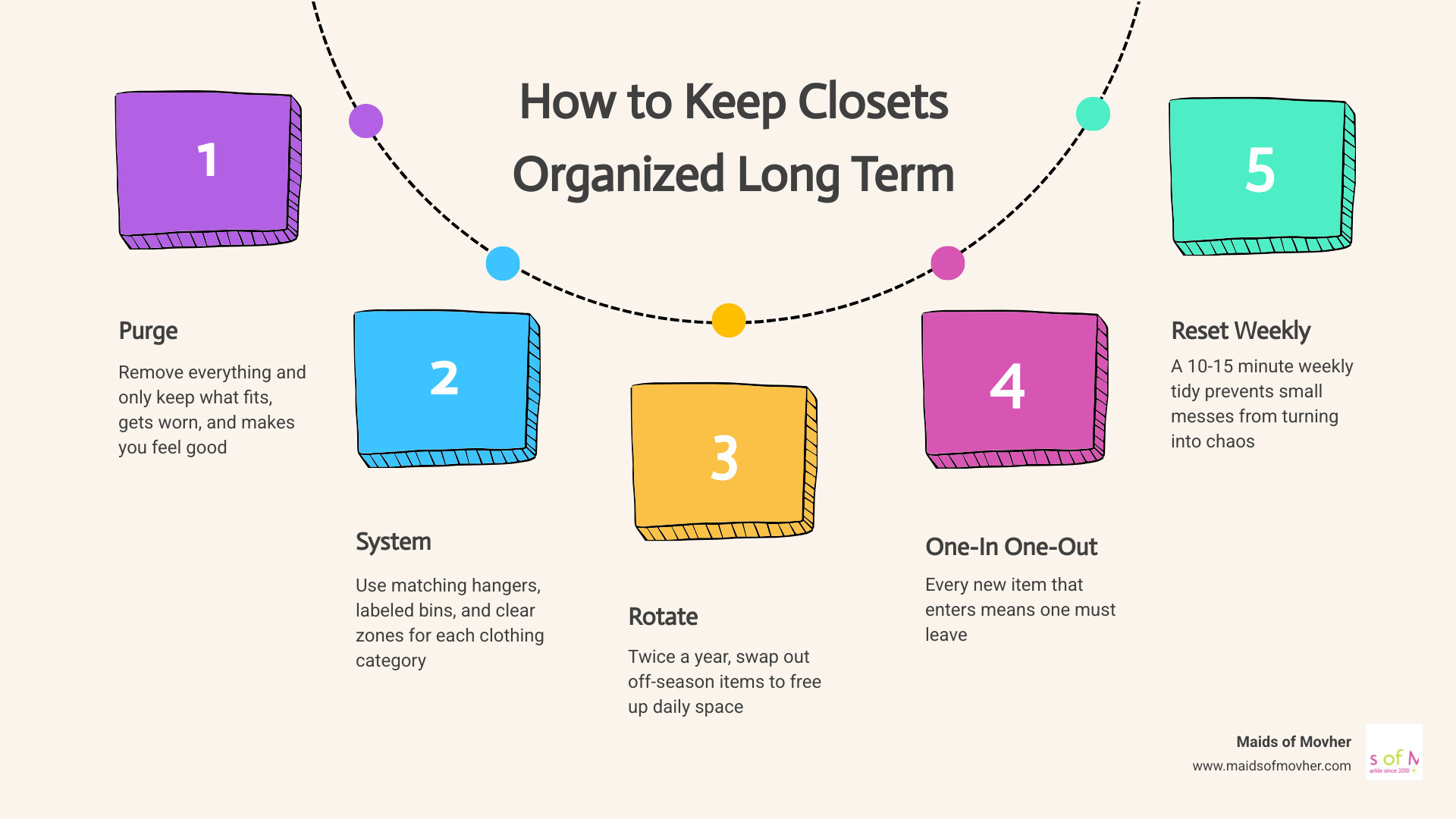
- Start with a full purge – Remove everything and only keep what fits, gets worn, and makes you feel good.
- Build a simple system – Use matching hangers, labeled bins, and clear zones for each clothing category.
- Rotate seasonally – Twice a year, swap out off-season items to free up daily space.
- Apply the one-in, one-out rule – Every new item that enters means one must leave.
- Reset weekly – A 10-15 minute weekly tidy prevents small messes from turning into full-blown chaos.
It’s 6:30 AM. You’re already running behind. And somehow, despite a closet full of clothes, you can’t find a single thing to wear.
Sound familiar? You’re not alone — and it’s not a you problem. It’s a system problem.
Research shows the average person spends 17 minutes every morning deciding what to wear. That’s nearly two hours a week lost to a disorganized closet. A Princeton University study found that cluttered environments directly hurt our ability to focus and complete tasks, while researchers at UCLA confirmed that cluttered spaces raise stress hormones and drain mental energy throughout the day. Nearly a third of Americans say disorganization at home weighs on them — and the closet is often ground zero.
The good news? Long-term closet organization isn’t about a perfect Pinterest setup or an expensive custom renovation. It’s about building a repeatable system that works with your real life, not against it.
I’m Sabrina Jones, owner of Maids of Movher and a Spokane-based home services entrepreneur with over a decade of experience helping families create cleaner, calmer living spaces — and I know how much easier daily life becomes when your home systems, including your closet, are built to last. In this guide, I’ll walk you through exactly how to keep closets organized long term in five practical steps you can start this weekend.
Easy how to keep closets organized long term word list:
The Core Strategy: How to Keep Closets Organized Long Term
To build a closet system that actually lasts beyond next Tuesday, we have to look past the surface level. Most of us are guilty of organizing clutter rather than reducing it. We buy pretty baskets to hide things we haven’t worn since 2021, or we try to force ourselves into high-maintenance routines that don’t fit our busy schedules.
The secret to knowing how to keep closets organized long term is establishing a self-regulating system. A sustainable system doesn’t rely on pure willpower; it relies on clear boundaries and honest boundaries.

Step 1: The Initial Cleanout (and Reclaiming Your Space)
Before you hang a single shirt, you must clear the slate. Trying to organize a closet that is packed to the brim is like trying to paint a wall while it’s raining — it simply won’t stick. We recommend taking every single item out of your closet. This creates a clean slate and forces you to confront exactly how much you own.
To make the process easier and prevent decision fatigue, we love using the 5-5-5 Rule of Decluttering. This is an objective psychological tool that helps bypass our natural “loss aversion” (the fear of letting go of things we spent money on). When looking at a questionable piece of clothing, ask yourself these three questions:
- Does this item cost less than $5 to replace if I absolutely need it again?
- Would I miss this item in the next 5 days if it disappeared?
- Will I even remember this item exists in 5 months?
If the answer to these is no, it’s clutter.
For a complete step-by-step walkthrough on executing this initial purge without losing your mind, check out our guide on Closet Cleanout 101 The Practical Guide To A Mess Free Home/.
Core Decluttering Questions to Ask Yourself:
- Does this fit my current body right now? Keeping “aspirational” clothes only breeds guilt and takes up prime real estate.
- Have I worn this in the past 12 months? If you skipped it through all four Spokane seasons, you aren’t going to wear it next year.
- Is it comfortable and in good repair? Stained, torn, or itchy clothes belong in the discard or textile recycling pile.
- Does it reflect my current style and lifestyle? If you transitioned to working from home in Liberty Lake, you probably don’t need fifteen formal business suits anymore.
The “One-In, One-Out” Rule
Once you’ve whittled your wardrobe down to what you actually love and wear, you must protect those boundaries. The easiest way to do this is by implementing the one-in, one-out rule.
Whenever you bring a new item into your home — whether it’s a cozy new sweater bought during a weekend stroll in downtown Spokane or a pair of boots for our slushy winters — one older item must leave your closet. This forces intentional purchasing. If you aren’t willing to let go of an existing shirt to make room for a new one, you probably don’t need the new one as much as you think!
Smart Storage Solutions and Zone Creation
Once you have edited your wardrobe, it is time to build a smart, visual layout. If you have to hunt for an item, you will likely never wear it. Visual organization and clear categorization are the keys to long-term success.
The human brain loves visual order. When your closet looks like a beautiful, curated boutique, you are naturally more motivated to keep it that way. We recommend organizing your clothing using a “Type-Then-Color” strategy:
- Group by Category first: Keep all short-sleeve tops together, all long-sleeve button-ups together, all pants together, and so on.
- Sort by Color second: Within each category, arrange items from light to dark.
This layout does more than just look pretty. It immediately reveals duplicates. If you group your tops and realize you own nine identical black T-shirts, you’ll think twice before buying a tenth.
If you are dealing with tight quarters in an older home in Mead or a compact apartment in Airway Heights, read our guide on The Complete Guide To Closet Organization Ideas For Small Spaces/ to maximize every square inch.
Maximizing Vertical Space and Visibility
One of the biggest mistakes we see in Spokane homes is ignoring vertical space. Standard closets have a single rod and a shelf above it, leaving feet of wasted space near the ceiling and floor.
To double your hanging capacity without remodeling, install a double hanging rod. A simple over-the-rod extender can instantly turn a single-hang section into a double-hang zone, giving you 50% more space for shirts, skirts, and folded pants.
Additionally, replace mismatched wire and plastic hangers with slim, matching velvet hangers. Velvet hangers save an incredible amount of horizontal space, prevent clothes from slipping off onto the floor, and create a uniform visual line that instantly calms the mind.
Storage Products That Help How to Keep Closets Organized Long Term
Investing in a few smart, budget-friendly organization products will make maintaining your closet almost effortless. Here are our top recommendations:
- Slim Velvet Hangers: The ultimate space-saver that protects delicate fabrics.
- Acrylic Shelf Dividers: These keep stacks of sweaters or jeans from toppling over into messy piles. Limit stacks to four items high so they stay manageable.
- Clear, Labeled Bins: Perfect for out-of-season accessories, hats, or swimsuits. If you can see what’s inside, you’ll actually use it.
- Over-the-Door Organizers: Great for shoe collections, belts, scarves, or small accessories in tight spaces.
When choosing a structural closet system, it helps to understand your options. Below is a quick comparison of the three primary types of closet systems to help you decide which fits your home, budget, and rental status:
| System Type | Average Cost | Best For | Pros | Cons |
|---|---|---|---|---|
| Wire Shelving | $50 – $200 | Renters, tight budgets, humid areas | Highly affordable, excellent air circulation, easy DIY install | Can look utilitarian, wire spacing can make small items unstable |
| Freestanding Wood/Laminate | $150 – $600 | Mid-range budgets, temporary setups | Modular, stylish, preserves security deposits (non-permanent) | Heavy to move, may not perfectly fit awkward sloped ceilings |
| Custom Built-In | $1,000 – $5,000+ | Long-term homeowners | Tailored to your exact habits, maximizes every inch, boosts home resale value | High upfront investment, permanent (cannot take with you if you move) |
Seasonal Clothing Rotation and Maintenance Habits
Living in the Inland Northwest means experiencing true four-season weather. We transition from blazing summer days at Liberty Lake to freezing, snowy winters in Spokane Valley. Trying to keep your bulky winter parkas, heavy snow boots, lightweight summer sundresses, and beach sandals in your primary closet all year round is a recipe for clutter.
A twice-yearly seasonal clothing rotation (typically in April and October) is one of the most effective ways to free up to 50% of your closet space.
During your seasonal swap, pack away off-season clothes in vacuum-sealed bags or labeled plastic bins. Vacuum storage bags can compress bulky sweaters and winter coats by up to 75%, making them easy to slide under the bed or store on high, out-of-reach closet shelves.
Before you pack anything away for the season, make sure the garments are clean. Storing dirty clothes can attract pests and lock in odors over time.
If you are prepping your home for a seasonal transition, clearing out your closets is also the perfect time to prep your entire home for a deep clean. To make your life easier, read our guide on how to Clear The Clutter Before The Cleaner So Your Surfaces Can Shine/.
Daily and Weekly Habits on How to Keep Closets Organized Long Term
The best closet system in the world will fail if you don’t build simple habits to maintain it. Closets typically fall apart within three weeks without small, consistent touch-ups. Fortunately, you don’t need hours of free time — just a few minutes of focused attention.
The 2-Minute Daily Habit
- Put it back immediately: When you try on an outfit and decide not to wear it, take the extra five seconds to rehang it or fold it and put it back in its designated spot. Do not throw it on “the chair” or leave it in a pile on the floor.
- Empty your pockets: At the end of the day, empty receipts, change, and keys from your coat and pants before hanging them up.
The 15-Minute “Sort It Out Sunday” Reset
Every Sunday, dedicate 10 to 15 minutes to a quick closet reset. This routine keeps small drifts of clutter from snowballing:
- Rehang and realign: Put away any clean laundry that accumulated over the week. Rehang items that slid out of place, and make sure all hangers are facing the same direction.
- Align your shoes: Put shoes back in their designated pairs on your shoe rack or in their bins.
- Check your “attention basket”: Keep a small basket or canvas bag in your closet for items that need dry cleaning, mending, or donation. On Sunday, check this basket and address any items inside.
If you have furry family members, keeping your bedroom and closet clean also means keeping pet dander and hair at bay. For our best tips on managing pet-friendly households, check out The Ultimate Guide To Keeping Your Home Fresh With Pets/.
Frequently Asked Questions About Closet Maintenance
What are the most common mistakes that cause closets to become disorganized again?
The single biggest mistake people make is buying storage containers and organizing products before editing their wardrobe. It is easy to get excited at the store, buy ten beautiful baskets, and then realize they don’t fit your shelves or your storage needs. Always purge first, measure second, and shop third.
Another common pitfall is keeping “just-in-case” clothes or items that do not fit your current body. This creates visual noise and mental guilt every time you open the door. Finally, many closets fail because they lack a designated “landing pad” for dirty clothes, dry cleaning, or donations, causing these items to pile up on the floor.
How often should I do a full closet cleanout?
We recommend doing a deep closet edit twice a year, ideally during your spring and fall seasonal rotations.
To easily identify items you aren’t wearing, try the Reverse Hanger Trick. At the start of a season, turn all your hangers backward (so the hook points toward you). When you wear an item and return it to the closet, hang it up the normal way. At the end of six months, any hanger still facing backward holds a garment you did not wear. This gives you hard, visual evidence of what to donate during your next cleanout.
How do I handle sentimental clothing items that I don’t wear?
Emotional attachment is one of the hardest hurdles to overcome when decluttering. The memory is in you, not in the fabric.
If you have sentimental pieces — like a wedding dress, a concert tee from college, or a passed-down family heirloom — prime closet space is not the place to store them. Prime closet space should be reserved strictly for the clothes you wear today.
Instead, clean these sentimental items and store them safely in archival garment bags or memory boxes in long-term storage (like under the bed or in a dry attic). Keeping these items out of your daily wardrobe protects them from wear and tear while making your mornings much smoother. Speaking of protecting your home investments, if you’re moving heavy storage boxes around, be sure to read our guide on How To Protect Your Hardwood Floors From Everyday Wear And Tear/ to keep your home’s surfaces looking brand new.
Conclusion
Knowing how to keep closets organized long term is all about designing a system that respects your real-life habits, keeping only what serves you, and taking a few minutes each week to keep things in check. When your closet is organized, your mornings are calmer, your decision fatigue disappears, and you start your day with a sense of peace.
At Maids of Movher, we believe that a clean, organized home is the foundation of a happy, stress-free life. Since 2010, our woman-owned residential cleaning company has been helping homeowners across Spokane, Spokane Valley, Mead, Airway Heights, and Liberty Lake reclaim their weekends.
We do things differently here. By prioritizing an employee-first philosophy — offering the highest wages in the area, paid training, and no nights or weekends — we keep our team happy, consistent, and dedicated. When our employees are cared for, they treat your home with the utmost respect, delivering reliable, top-tier service every single time. Plus, we love giving back to our community through our proud partnership with Cleaning for a Reason, providing free home cleanings to local cancer patients.
Let us handle the heavy lifting of keeping your home fresh and sparkling so you can spend your free time doing what you actually love — whether that’s hiking around the Pacific Northwest, enjoying a sunny day at the lake, or just relaxing in a beautifully tidy bedroom.
Ready to experience the lifestyle benefits of a professionally cleaned home? Download our free cleaning checklists today, or contact us to schedule your next service!
