
Why Pet Owners in Spokane Need a Smarter Cleaning Routine
Cleaning tips for pet owners can make the difference between a home that feels fresh and one that constantly smells like wet dog. If you’re short on time, here are the most important ones to know:
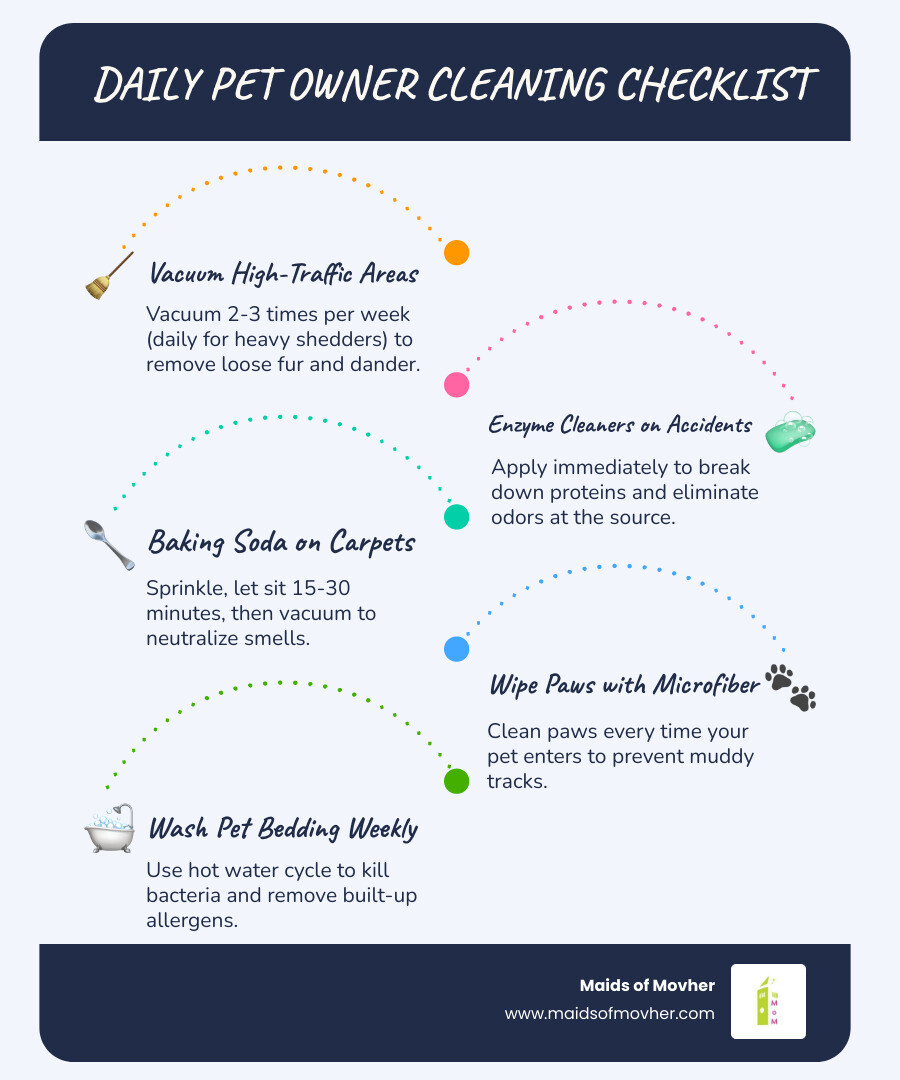
- Vacuum high-traffic areas 2-3 times per week (daily for heavy shedders)
- Use enzyme cleaners on accidents to break down odors at the source
- Sprinkle baking soda on carpets and bedding, let sit 15-30 minutes, then vacuum
- Wipe paws with a microfiber cloth every time your pet comes inside
- Wash pet bedding weekly on a hot cycle
- Use a damp rubber glove to lift embedded fur from upholstery
- Avoid bleach and ammonia — both are harmful to pets
- Scoop the litter box daily and do a full sanitize monthly
Pets bring real joy into a home. Roughly two-thirds of households in the greater Seattle and Spokane region have at least one cat or dog — so the daily reality of fur on the sofa, muddy paw prints on the floor, and the occasional accident is something most local families know well. The mess can feel relentless, especially for busy households already stretched thin on time.
The good news? With the right habits and tools, keeping your home clean alongside your pets doesn’t have to take over your life.
I’m Sabrina Jones, owner of Maids of Movher and a home services professional with over a decade of experience helping Spokane families maintain cleaner, healthier homes — including households with beloved four-legged members. My team has developed practical cleaning tips for pet owners that actually fit into a busy schedule without the overwhelm. Read on to find out exactly what works.
Essential Cleaning Tips for Pet Owners to Manage Shedding
Shedding is perhaps the most persistent challenge we face as pet parents. Fur doesn’t just sit on the surface; it weaves itself into the fibers of our rugs and upholstery. To truly tackle it, you need to understand the power of static electricity and friction.
One of our favorite “secret weapons” isn’t an expensive machine—it’s a simple rubber dishwashing glove. By putting on the glove and dampening it slightly with water, you can run your hand over fabric surfaces. The rubber creates a static charge that pulls hair out of the weave, gathering it into easy-to-grab clumps. This is one of those Pet Owner Cleaning Service Washington Tips that saves hours of frustration compared to vacuuming alone.
For clothing and quick touch-ups on curtains, keep lint rollers in every room. If you’re dealing with a heavy shedder, like a Husky or a Golden Retriever, try vacuuming in multiple directions. Going lengthwise, widthwise, and diagonally ensures you’re lifting hair that’s trapped from different angles.
Daily Grooming as One of the Best Cleaning Tips for Pet Owners
Prevention is the best form of cleaning. The less hair that falls off your pet, the less you have to pick up off your floors. We recommend implementing a daily grooming routine to catch loose fur at the source.
Using high-quality deshedding tools can significantly reduce the “tumbleweeds” in your hallway. If the weather in Spokane is nice, take the grooming session outside to keep the dander and fur out of your living room entirely. Regular bathing also helps, though you should be careful not to over-bathe, which can dry out their skin. For more advice on managing the daily chaos, check out our guide on how to Keep Home Clean With Pets.
Using the Right Tools: More Cleaning Tips for Pet Owners
The tools you use matter just as much as how often you use them. Standard vacuums often exhaust fine dander back into the air. We suggest using vacuums equipped with HEPA (High-Efficiency Particulate Air) filters, which trap 99.97% of dust, pollen, and pet allergens.
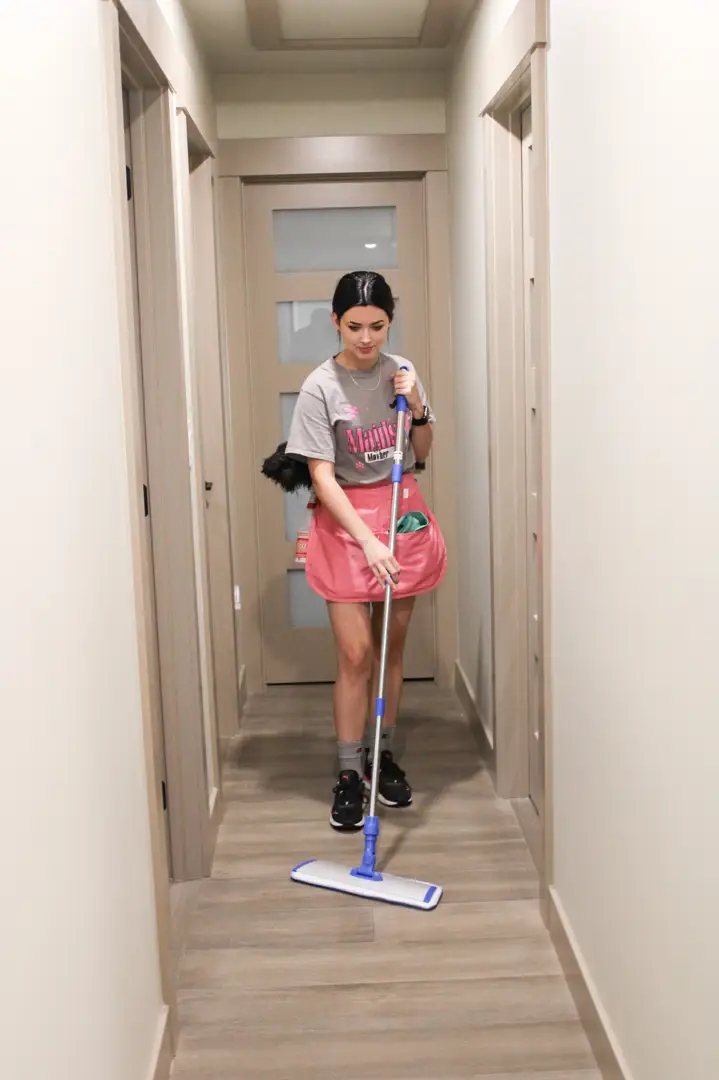
For hard floors, skip the traditional broom, which often just blows hair into the corners. Instead, use an electrostatic broom or a microfiber mop. Microfiber is a game-changer; it can remove 99% of bacteria with just water and is far more effective at “grabbing” hair than synthetic bristles. Specialized pet brooms with rubber bristles are also available and can remove up to 3x more hair than a standard dustpan.
Eliminating and Preventing Lingering Pet Odors
Even if your home looks clean, a lingering “pet smell” can make it feel otherwise. Most pet odors are organic, meaning they require specific treatments to neutralize. Baking soda is your best friend here. It’s a natural odor absorber, not just a fragrance that masks smells. Sprinkle it liberally on carpets, let it sit for at least 20 minutes (or overnight for tough smells), and vacuum it up.
For accidents, standard soap and water often aren’t enough. You need enzyme-based cleaners. These products contain “good” bacteria that actually eat the uric acid crystals found in urine. Without breaking down those crystals, the scent will remain, often attracting your pet back to the same spot to “mark” it again. You can find more details on choosing the right products in our Pet Friendly Cleaning Washington Guide.
Don’t forget your air quality. Your HVAC filters work overtime in a pet home. We recommend changing them every two months—or even monthly during peak shedding seasons—to keep dander from circulating through your vents.
Maintaining Fresh Bedding and Toys
Pet beds are essentially giant sponges for hair, skin cells, and oils. To keep odors at bay, wash all machine-washable bedding, blankets, and even plush toys once a week on a hot water cycle.
For hard toys and food bowls, use odor-resistant sponges. We also suggest a “toy rotation” system. Instead of having twenty toys on the floor collecting dust and hair, keep five out and store the rest in a bin. Rotate them weekly to keep your pet engaged and your floors less cluttered. This is another one of those Dog Owner Cleaning Service Washington Tips that makes a big difference in the overall “feel” of your home.
Managing Cat Litter and Feeding Areas
Cat owners face the unique challenge of “litter tracking.” To contain the mess, choose a high-sided litter box or one with an inward-protruding rim. Place a textured litter mat—ideally one with a mesh or honeycomb design—outside the box to catch grains from your cat’s paws.
In the kitchen, use non-skid silicone mats under food and water bowls. This catches spills and prevents “kibble scatter.” Daily scooping of the litter box is a non-negotiable for odor control and hygiene, preventing the buildup of bacteria that can affect both you and your feline friends.
Safe and Effective Cleaning Products for Pet-Friendly Homes
Many homeowners are surprised to learn that common cleaners can be quite toxic to animals. Because pets spend so much time on the floor and then lick their paws, they are at high risk for ingesting chemical residues.
| Product | Pet-Safe Status | Best Use |
|---|---|---|
| White Vinegar | Safe (Non-toxic) | Glass, hard floors, and general deodorizing |
| Baking Soda | Safe (Non-toxic) | Carpet odors and scrubbing tough stains |
| Lemon Juice | Safe (Non-toxic) | Natural disinfectant and glass cleaner |
| Steam Cleaning | Highly Recommended | Deep sanitization without any chemicals |
| Enzyme Cleaners | Safe (Check Label) | Urine, vomit, and organic stains |
| Bleach | DANGEROUS | High respiratory risk; toxic if ingested |
| Ammonia | DANGEROUS | Irritates lungs; smells like urine to pets |
Steam cleaning is one of our top recommendations for Spokane pet owners. High-heat steam eliminates up to 99.9% of viruses and bacteria on hard surfaces without the need for any detergents. For more on safe alternatives, see our guide on Animal Safe Cleaning Products Washington.
Avoiding Toxic Chemicals in the Home
It is vital to avoid products containing bleach or ammonia. Bleach fumes are incredibly harsh on a dog or cat’s sensitive respiratory system. Ammonia is even trickier; because urine contains ammonia, using an ammonia-based cleaner can actually trick your pet into thinking a spot is a bathroom, leading to repeat accidents.
Also, be cautious with essential oils. While they smell great to us, oils like tea tree, peppermint, and citrus can be toxic to pets if diffused or applied to the skin. Keeping a healthy home means being mindful of what we spray into the air. For a deeper look at how cleaning habits impact your family’s health, read Is Your Clean House Actually Hurting Your Kids And Pets/.
Quick Response Strategies for Pet Accidents and Mud
In the Pacific Northwest, mud is a seasonal reality. To prevent your home from becoming a giant mud pit, set up a “paw-wiping station” at your primary entrance. Keep a stack of microfiber towels and a spray bottle of water or pet-safe wipes right by the door.
When it comes to mud on carpets, here is a counter-intuitive tip: let it dry. If you try to clean wet mud, you’ll just smear it deeper into the fibers. Once it’s dry, you can brush the dirt loose and vacuum it up.
For “bathroom” accidents, speed is key. Blot—never rub—the area with paper towels or a white cloth to soak up as much liquid as possible. Once blotted, apply your enzyme cleaner and let it work its magic.
Protecting Furniture and Flooring
If your pets are allowed on the furniture, washable throws or slipcovers are essential. It’s much easier to throw a cover in the wash than to deep-clean a sofa.
When it comes to home design, certain choices make cleaning much easier:
- Semi-gloss paint: This is much easier to wipe down than flat finishes when your dog leaves “nose art” on the walls or shakes off water after a walk.
- Low-pile rugs: These trap less hair and are easier to vacuum than high-shag options.
- Polyurethane sealing: If you have hardwood, ensure it is well-sealed to prevent liquid accidents from soaking into the wood and causing permanent odors.
- Scratching posts: Provide plenty of vertical and horizontal scratching surfaces to redirect cats away from your furniture.
Frequently Asked Questions about Cleaning with Pets
How do I remove embedded pet hair from my couch?
Aside from the damp rubber glove trick, you can use a light mist of water mixed with a tiny amount of fabric softener. This helps break the static cling of the hair, making it easier to pull up with a stiff-bristled brush or an upholstery vacuum tool.
Is vinegar safe to use around my dogs and cats?
Yes! Distilled white vinegar is a fantastic, non-toxic cleaner. We recommend a 1:1 ratio of vinegar and water for a general-purpose spray. While the smell is strong initially, it dissipates quickly, taking many pet odors with it.
How can I stop my pet from tracking mud into the house?
Beyond the entrance station, keep the fur between your dog’s paw pads trimmed. This “toe hair” acts like a magnet for mud, burrs, and snow. Trimming it down significantly reduces the amount of debris they carry inside.
Conclusion
At Maids of Movher, we know that your pets are part of the family. Since 2010, we’ve been making homes sparkle across Spokane, Spokane Valley, Mead, Airway Heights, and Liberty Lake. As a locally and woman-owned business, we take pride in our community and our team.
We believe that a clean home and a happy pet can coexist. Our employee-first philosophy means our cleaners are well-paid, professionally trained, and truly care about the quality of their work. We don’t just “do a job”—we provide a service that gives you your weekends back. Whether you need a one-time deep clean to reset your home or recurring Dog Owner Cleaning Service Washington Tips and professional maintenance, we are here to help.
Let us handle the fur and the floor grime so you can get back to the belly scratches and long walks. After all, life is better when your home sparkles!
