
Why Summer Is the Worst Season for Dust and Allergens (And What to Do About It)
Dealing with dust and allergens in summer is a real struggle for millions of people – and if you live in the Spokane area, you know exactly what that feels like. The warm months bring open windows, backyard barbecues, and long evenings outside. They also bring grass pollen, mold spores, dust mites, and a whole lot of sneezing.
Here is a quick overview of the most effective ways to reduce summer allergens at home:
| Action | Why It Helps |
|---|---|
| Keep windows closed on high pollen days | Prevents outdoor allergens from entering your home |
| Use a True HEPA air purifier | Captures 99.97% of airborne particles including pollen and dust mite debris |
| Wash bedding weekly in hot water | Removes dust mites, pollen, and skin cells that accumulate in fabric |
| Shower and change clothes after going outside | Stops pollen from transferring to furniture and bedding |
| Keep indoor humidity between 30-50% | Discourages dust mite and mold growth |
| Vacuum with a HEPA filter vacuum | Traps fine particles instead of recirculating them |
| Check daily pollen counts | Helps you plan outdoor activities around lower-risk windows |
More than 50 million Americans deal with seasonal allergies every year – a condition doctors refer to as allergic rhinitis or hay fever. Summer is one of the most intense periods because, unlike spring when tree pollen dominates, summer shifts the burden to grasses and weeds whose pollen travels easily on the wind. Add in the heat that encourages dust mite growth, the humidity that feeds mold, and the open windows that invite outdoor particles inside, and your home can quickly feel like part of the problem rather than a refuge from it.
The good news? A combination of smart habits, the right tools, and a consistent cleaning routine can make a significant difference – and that is exactly what this guide covers.
I’m Sabrina Jones, owner of Maids of Movher and a home services professional with over a decade of hands-on experience helping Spokane families maintain cleaner, healthier living spaces – including dealing with dust and allergens in summer when indoor air quality matters most. In the sections ahead, I’ll walk you through everything from identifying your triggers to building a cleaning routine that actually keeps up with the season.
Identifying Common Summer Triggers and Symptoms
As we move into May 2026, the landscape around Liberty Lake and Mead begins to change. While many people think “allergy season” ends with the spring blossoms, summer introduces a whole new set of microscopic invaders.
Grass and Weed Pollen
Unlike the tree pollen that coats our cars in yellow dust during April, summer is the peak season for grasses. Timothy grass, Rye grass, and Bermuda grass are major culprits. Their pollen is lightweight and designed to travel miles on a breeze. Later in the summer, weeds like ragweed take over, often persisting until the first frost.
Mold Spores and Dust Mites
Summer heat and humidity are the primary drivers for two of the most common indoor allergens. Dust mites do not actually drink water; they absorb moisture from the air. When humidity levels rise, their population explodes in carpets, upholstery, and bedding. Similarly, mold spores thrive in damp areas like bathrooms, basements, or even around poorly maintained AC drip pans.

The Danger of Summer Stings
It is not just about sneezing. Research shows that roughly 2 million Americans are allergic to stinging insects. In the Inland Northwest, yellow jackets and bees are highly active during summer picnics. For those with allergies, insect venom can cause severe reactions, making it vital to keep nests away from the home’s entry points.
Recognizing the Symptoms
While most of us are familiar with sneezing, nasal congestion, and itchy, watery eyes, summer allergens can also trigger:
- Allergic Asthma: Tightness in the chest or wheezing, often worsened by heat and humidity.
- Pollen Food Syndrome: You might notice an itchy mouth or throat after eating raw produce like melons, tomatoes, or peaches. This happens because the proteins in some fruits mimic pollen proteins, confusing your immune system.
- Skin Irritation: Contact with grasses or airborne mold can lead to hives or “summer eczema.”
Why Dealing with Dust and Allergens in Summer is a Challenge
You might wonder why your house feels “dustier” in July than it does in January. There are several environmental factors at play in the Spokane Valley that make dealing with dust and allergens in summer a unique uphill battle.
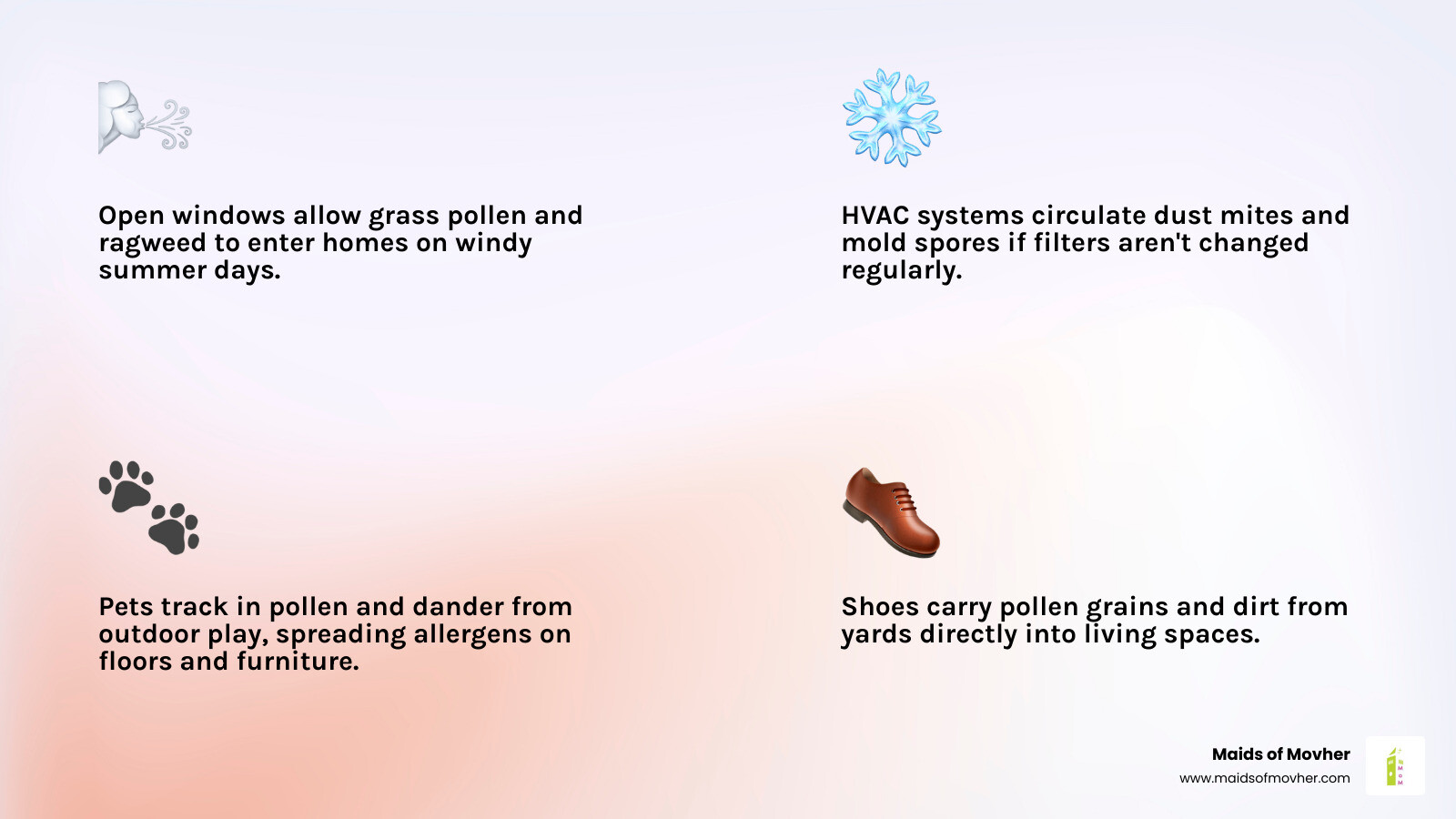
- Open Windows: We all love that cross-breeze on a cool evening, but open windows act like a giant vacuum, pulling in pollen, agricultural dust from nearby fields, and even wildfire smoke particles that are common in our region.
- AC Circulation: If your HVAC filters are not changed regularly, your air conditioner is simply recirculating the same dust and dander over and over.
- Skin Shedding: We tend to show more skin in summer, and humans naturally shed millions of skin cells daily. Since skin cells are the primary food source for dust mites, our summer wardrobes actually contribute to the indoor allergen cycle.
- Static Electricity: In the drier weeks of a Washington summer, static electricity can build up on surfaces, acting as a magnet for dust.
The Spokane Factor: Agricultural Dust and Smoke
In areas like Mead and Airway Heights, we also deal with outdoor dust from local farming activities. Dry, windy days can carry soil minerals and organic matter into residential neighborhoods. Additionally, by late summer, we often face air quality challenges from regional wildfires, which introduce fine particulate matter that settles deep into carpets and upholstery.
Monitoring Pollen Counts for Outdoor Planning
To stay ahead of the game, we recommend using resources like the National Allergy Bureau or local weather apps to check daily pollen forecasts.
- Peak Times: Pollen counts are typically highest in the early morning and late afternoon.
- The Rain Benefit: A good rainstorm is a natural air purifier. It washes pollen out of the air, making the hour immediately following a rainfall a better time for a walk or yard work.
- Evening Relief: Generally, pollen levels begin to drop in the evening, making this a safer time for outdoor relaxation.
Protective Gear for Dealing with Dust and Allergens in Summer
If you are heading out for a day of gardening or hiking near Liberty Lake, consider these simple barriers:
- Sunglasses: They do not just protect from UV rays; they act as a physical shield for your eyes against blowing pollen.
- Wide-Brimmed Hats: These help prevent pollen from settling in your hair, which you would otherwise transfer to your pillow at night.
- Pollen-Filtering Masks: If you are mowing the lawn, a mask is an important tool to reduce inhaling concentrated grass particles.
Creating an Allergen-Free Sanctuary Indoors
Since we spend a significant amount of time sleeping, the bedroom should be your primary focus when dealing with dust and allergens in summer. However, the entire home needs a strategy to keep the air breathable.
The Power of HEPA
High-Efficiency Particulate Air (HEPA) filters are the gold standard. A True HEPA filter can trap 99.97% of particles as small as 0.3 microns. We suggest:
- Portable Air Purifiers: Place these in high-traffic areas and bedrooms.
- HEPA Vacuums: Standard vacuums often suck up dust and blow the smaller allergens right back out the exhaust. A HEPA-certified vacuum helps ensure those particles stay trapped in the bag or canister.
Managing Humidity
To keep dust mites and mold at bay, aim for an indoor humidity level between 30% and 50%. If your home feels muggy, a dehumidifier can make the environment less hospitable for these microscopic pests.
Top-Down Dusting Strategy
Gravity is not your friend when it comes to dust. Research shows that 62% of Americans neglect their ceilings when dusting. When you clean, always start at the highest point – ceiling fans, crown molding, and the tops of bookshelves – and work your way down to the baseboards. This ensures that any dust disturbed during the process is eventually captured when you vacuum the floors.
| Tool | Effectiveness | Why? |
|---|---|---|
| Microfiber Cloth | High | The split fibers create a positive charge that grabs and holds dust. |
| Feather Duster | Low | Mostly just moves dust into the air where it settles elsewhere. |
| Damp Rag | Medium | Good for trapping dust, but can leave streaks or moisture that feeds mold. |
For many of our clients, keeping up with this level of detail is a full-time job in itself. This is why many choose to 5 reasons to hire recurring dusting and vacuuming services in Airway Heights WA to help ensure that hidden spots like baseboards and ceiling fans are not missed.
Effective Cleaning Routines for Dealing with Dust and Allergens in Summer
Consistency beats intensity every time. You do not need to spend eight hours every Saturday deep cleaning if you adopt a rhythm of micro-cleaning.
The Morning Micro-Clean
While your coffee is brewing, take five minutes to wipe down the most used surfaces in your kitchen or living room with a microfiber cloth. This prevents the daily fallout of dust from becoming a thick layer.
Bedding and Textiles
- Weekly Wash: Wash all sheets, pillowcases, and blankets once a week in hot water at least 130 degrees F to help kill dust mites.
- Indoor Drying: During high pollen days, avoid hanging laundry outside. Wet fabric acts like a magnet for airborne pollen.
- Curtains and Blinds: These are classic dust traps. Vacuum them with a brush attachment once a month, or swap heavy velvet curtains for light, washable linen blends for the summer.
HVAC Maintenance
Check your air filters every 30 to 60 days during the summer. If you have pets or live in a particularly dusty area of Spokane, you may need to change them even more frequently. Look for filters with a high MERV rating or those labeled asthma and allergy friendly.
If the thought of scrubbing baseboards and vacuuming under the bed sounds like a chore you would rather skip, you are not alone. We specialize in Spokane’s top services for recurring dusting and vacuuming, giving you back your weekends while we handle the heavy lifting.
Managing Pet Dander and Outdoor Track-In
We love our fur babies, but they are essentially walking pollen sponges. When your dog runs through the grass in Liberty Lake, they are bringing millions of allergens back into your living room.
The Dander Myth
Many people think they are allergic to pet hair, but the real trigger is a protein found in the animal’s dander, saliva, and urine. Because these particles are so tiny and jagged, they stick to everything – walls, clothes, and even the ceiling.
To keep home clean with pets, we recommend:
- The Paw Wipe Ritual: Keep a container of pet-safe wipes by the door. Wiping their paws and underbelly after a walk can reduce the amount of pollen tracked onto your carpets.
- Outdoor Grooming: Brush your pets outside to keep the loose fur and dander from settling indoors.
- Frequent Bathing: Washing your dog twice a week can significantly reduce the amount of dander they release into the air.
For more specific advice, check out our Pet-friendly cleaning Washington guide or our Dog owner cleaning service Washington tips. We are a pet-friendly company, and we always use animal safe cleaning products Washington to help your pets stay healthy while your home gets clean. You can also find more pet owner cleaning service Washington tips on our blog to help manage the fur-nado that often comes with summer shedding.
Medical Relief and Frequently Asked Questions
While cleaning is your best defense, sometimes you need a little extra help from the pharmacy or a doctor.
Over-the-Counter and Natural Solutions
- Antihistamines: These block the histamines that cause sneezing and itching.
- Nasal Steroid Sprays: These are often the most effective for long-term relief but should be started a week or two before allergy season hits its peak.
- Saline Rinses: Using a Neti pot or saline spray acts like giving your sinuses a bath, physically washing away the pollen and mucus. Important: Always use distilled or previously boiled water to avoid infection.
When to See an Allergist
If OTC medications are not working, or if you experience dizziness, nausea, or trouble breathing, it is time to seek professional help. An allergist can perform a scratch test – which gives results in about 15 minutes – to identify your exact triggers. They may recommend long-term solutions like allergy shots, also called immunotherapy, to help desensitize your immune system over time.
What is the fastest way to get relief from summer dust allergies?
The fastest way to stop a reaction is to remove the trigger. Take an antihistamine, use a saline nasal rinse to clear your passages, and immediately hop in the shower. Changing into a fresh set of clothes that has not been exposed to the outdoors will help prevent you from re-contaminating your space.
How often should I wash my sheets to reduce summer allergens?
During the peak of summer, we recommend washing your sheets twice weekly. Because we sweat more and shed more skin in the heat, dust mites can multiply rapidly. Using dust-mite-proof covers on your mattress and pillows provides an extra layer of protection.
When is the best time of day to avoid outdoor allergens?
The absolute best time to go outside is right after a heavy rain. Otherwise, aim for the late evening or night when pollen counts have naturally settled. Avoid the early morning from 5 AM to 10 AM when plants are most active in releasing pollen.
Conclusion: Making Your Home a Sparkle-Clean Refuge
Dealing with dust and allergens in summer does not have to mean spending your entire season indoors with a box of tissues. By understanding your triggers, maintaining a smart cleaning rhythm, and using the right tools, you can reclaim your home and your health.
At Maids of Movher, we understand that your time is valuable. Whether you are busy exploring the trails in Liberty Lake, enjoying a family day in Mead, or working in downtown Spokane, you deserve to come home to a space that is truly clean – not just surface clean.
As a locally-owned and woman-owned business, we take pride in our employee-first philosophy. By paying the highest wages in the area and ensuring our team is happy and well-rested, we provide a level of consistency and reliability that is hard to find. We are committed to our community through partnerships like Cleaning for a Reason, where we provide free services to cancer patients.
Let us give you back your weekends. Whether you need a one-time deep clean to kick off the summer or recurring services to keep the dust at bay, we are here to help.
Ready to start breathing easier? https://www.maidsofmovher.com/
