
Why Consistent Cleaning Is One of the Smartest Ways to Protect Your Home Investment
How consistent cleaning protects your home value is simpler than most homeowners realize — and more powerful than almost any renovation you could make. Here is a quick breakdown:
Consistent cleaning protects your home value by:
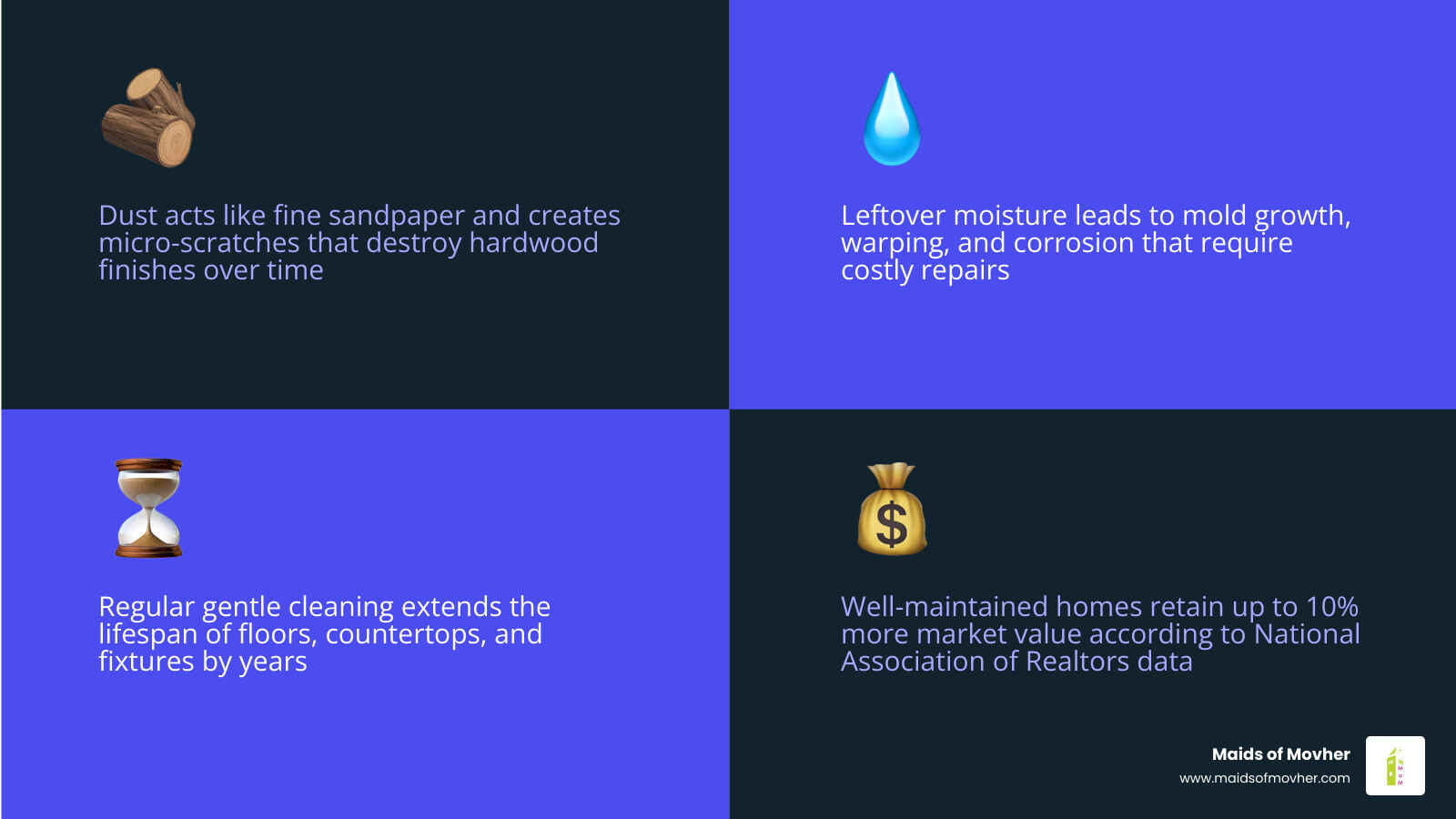
- Preventing surface damage – Dust and grit act like fine sandpaper, slowly grinding down floor finishes, countertops, and fixtures every day they are left in place
- Stopping moisture damage early – Regular cleaning removes residue and keeps surfaces dry, preventing the mold, warping, and corrosion that lead to costly repairs
- Extending material lifespan – Floors, appliances, grout, and fixtures last significantly longer when maintained with routine care rather than occasional aggressive scrubbing
- Supporting higher market value – Well-maintained homes can retain up to 10% more market value compared to properties that receive minimal care, according to data cited by the National Association of Realtors
- Creating strong first impressions – For buyers, appraisers, and renters, a clean home signals responsible ownership and reduces concerns about hidden maintenance issues
- Improving indoor air quality – Consistent cleaning removes dust mites, pet dander, and allergens that accumulate in surfaces, fabrics, and vents over time
Most people think about home value in terms of big-ticket upgrades — a new kitchen, fresh paint, or a remodeled bathroom. But the truth is that one of the most effective and affordable ways to protect your home’s long-term worth happens quietly, room by room, week by week. Neglect builds up slowly. A layer of dust here, a soap scum ring there, a little moisture left behind a faucet — none of it looks serious at first. But over months and years, that buildup erodes finishes, weakens materials, and sends a clear signal to anyone walking through your front door: this home has not been cared for.
The good news is that consistent, gentle cleaning interrupts that cycle before it starts.
I’m Sabrina Jones, owner of Maids of Movher and a home services entrepreneur with over a decade of hands-on experience seeing exactly how consistent cleaning protects your home value from the inside out. My teams have cleaned hundreds of Spokane-area homes, and I have watched how regular upkeep preserves surfaces, prevents expensive repairs, and helps homeowners protect the largest investment most of them will ever make. In the sections ahead, we will walk through the science, the financial ROI, the practical scheduling, and the common mistakes to avoid — so you can approach your home with a clear, confident plan.
The Science of Surface Decay: How Dirt and Grime Damage Your Home
To understand how consistent cleaning protects your home value, we have to look closely at what dust actually is. Far from being a soft, harmless layer of gray powder, household dust is a highly abrasive mixture of dead skin cells, outdoor soil, pollen, pet dander, and microscopic mineral particles.
When left on your floors or furniture, these tiny, sharp particles act exactly like fine sandpaper. Every time we walk across a dusty hardwood floor, or slide a cup across a dusty countertop, we grind these abrasive minerals directly into the surface finish. Over time, this friction creates thousands of micro-scratches. These scratches dull the protective topcoat, leaving the underlying wood or stone vulnerable to liquid spills, staining, and deeper structural wear.
Beyond physical abrasion, chemical corrosion plays a major role in surface decay. Cooking oils, skin oils, and airborne pollutants settle on surfaces in our kitchens and bathrooms. If not wiped away regularly, these oily residues turn acidic as they oxidize. This slow chemical breakdown eats away at paint, strips the protective sealants on natural stone countertops, and tarnishes stainless steel appliances.
Furthermore, dirt and organic grime are highly hydrophilic—meaning they attract and hold onto moisture. When damp dirt sits in the corners of window frames, along baseboards, or around plumbing fixtures, it keeps those materials constantly wet. This trapped moisture eventually causes wood to warp, paint to peel, and metal fixtures to rust. If you want to dive deeper into protecting your home’s most vulnerable surfaces, check out our detailed guide on How to Protect Your Hardwood Floors from Everyday Wear and Tear.
Why Gentle Care Beats Aggressive Scrubbing
A common pitfall for homeowners is the “boom-and-bust” cleaning cycle. This is where a home is neglected for weeks or months, followed by a massive, aggressive deep-cleaning session. In an attempt to conquer built-up grime, homeowners often reach for harsh chemical cleaners, bleach, and abrasive scrub brushes.
Unfortunately, aggressive scrubbing often causes more damage than the dirt itself. High-pH chemicals and abrasive pads can permanently strip away the protective polyurethane on hardwood floors, etch natural stone surfaces, and leave ugly swirl marks on acrylic tubs and stainless steel appliances.
Gentle, consistent cleaning is far more effective. By removing dust and light grime before they have a chance to bond to your surfaces, you only need mild soap, warm water, and soft microfiber cloths to maintain a spotless home. This low-impact approach keeps the protective coatings on your home’s surfaces fully intact, meaning your finishes look newer and last years longer. To make your bathroom maintenance easier without damaging your fixtures, read our tips on how to Stop Scrubbing Daily: How to Keep Your Bathroom Clean Longer.
How Consistent Cleaning Protects Your Home Value on Key Surfaces
Different surfaces throughout your home require specific, routine care to prevent degradation:
- Hardwood Floors: Regular vacuuming with a soft brush attachment removes the abrasive grit that wears down the protective finish, keeping the wood protected from water damage and deep scratches.
- Natural Stone Countertops (Granite, Marble, Quartz): Daily wiping with a pH-neutral cleaner prevents acidic foods (like lemon juice or tomato sauce) from etching the stone and breaking down the protective sealer.
- Stainless Steel Appliances: Removing fingerprint oils and cooking grease consistently prevents permanent pitting and discoloration of the metal.
- Bathroom Fixtures: Wiping down chrome, brass, or matte black fixtures prevents mineral buildup (limescale) from permanently etching the metal and damaging the internal cartridges. For a complete blueprint to keeping these spaces immaculate, explore The Ultimate Homeowner Guide to a Sparkling Bathroom.
The Financial ROI: How Consistent Cleaning Protects Your Home Value

When we look at home maintenance through a financial lens, consistent cleaning is easily the highest-yielding investment you can make. It is a simple mathematical equation: small, regular investments in cleaning prevent massive, unexpected capital expenditures down the road.
Consider the cost of deferred maintenance. When dirt, grit, and moisture are allowed to accumulate, materials degrade to the point where they can no longer be cleaned—they must be completely replaced. For example, failing to sweep and mop your hardwood floors regularly can wear the polyurethane finish down to the bare wood. Once the wood itself is damaged and stained by water, a simple screen-and-coat is no longer an option; you will have to pay for a full sand-and-refinish or a total floor replacement.
Here is a quick look at how the cost of regular maintenance compares to the financial sting of major surface replacements:
| Surface / Material | Preventive Maintenance Strategy | Cost of Neglect (Replacement/Refinishing) |
|---|---|---|
| Hardwood Floors | Weekly dust-mopping and gentle, damp microfiber cleaning | Full sanding, staining, and refinishing or complete wood replacement |
| Tile & Grout | Regular cleaning and sealing of grout lines | Complete re-grouting or full tear-out and tile replacement |
| Stone Countertops | Daily wiping with pH-neutral soap and annual resealing | Professional stone restoration, diamond polishing, or full replacement |
| Kitchen Appliances | Routine exterior and interior wipe-downs, filter cleaning | Premature appliance failure requiring brand-new units |
| Bathroom Fixtures | Regular removal of soap scum and hard water deposits | Replacement of corroded faucets, shower valves, and glass doors |
First Impressions for Appraisers and Buyers
If you are planning to sell or refinance your Spokane area home, cleanliness directly impacts your bottom line. Real estate appraisers and potential buyers make a subconscious assessment of your home within the first 30 seconds of walking through the door.
If they see dirty baseboards, soot-stained hearths, dusty ceiling fans, or stained carpet, they immediately begin a mental audit. They assume that if the visible parts of the home have been neglected, the invisible, critical systems—like the HVAC, roof, or plumbing—have been neglected too. This mental audit leads to lower appraisal values and lower purchase offers.
According to data often cited by the National Association of Realtors, a clean, decluttered home is the top recommendation for sellers. In fact, professional house cleaning and staging can boost a home’s sale price by 5% to 10%. On a $400,000 home in Spokane Valley or Liberty Lake, that is a potential swing of $20,000 to $40,000 in equity! To determine if your property is showing signs of deferred care, read about the Signs Your Spokane Home Needs a Deep Clean.
Health and Comfort: Indoor Air Quality and Structural Hygiene
A home’s value isn’t just about the dollar amount on an appraisal; it is also about the health and comfort of the people living inside it. According to the EPA, indoor air can be significantly more polluted than outdoor air. Dust, pollen, pet dander, mold spores, and dust mites settle into our carpets, upholstery, and air vents.
Every time we walk across the room or turn on our heating system, these particles are kicked back into the air we breathe. This constant circulation of allergens leads to poor sleep, respiratory irritation, and fatigue. Consistent cleaning—especially using high-velocity vacuums equipped with HEPA filtration—physically removes these pollutants from the home, creating a clean, neutral breathing environment.
If you share your home with furry family members, managing this buildup requires a targeted approach. Learn how to keep your space fresh and allergen-free with our guide to Keep Home Clean with Pets.
How Consistent Cleaning Protects Your Home Value by Preventing Mold and Moisture Damage
Moisture is the single most destructive element inside a residential structure. High-humidity rooms like bathrooms, kitchens, and laundry rooms are constantly exposed to water vapor, splashes, and spills.
When soap residue, body oils, and organic grime are left on bathroom tile and grout, they create the perfect breeding ground for mold and mildew. Mold doesn’t just look and smell terrible; it actively eats away at porous materials like drywall, wood framing, and grout.
If mold is left unchecked, it can cause structural rot behind your walls, leading to incredibly expensive remediation work. Consistent cleaning removes the organic food sources that mold needs to survive, while keeping surfaces dry and well-ventilated. To stop this cycle before it takes hold of your home, read about how to Stop the Grime Cycle with Biweekly Recurring Cleaning Services in Mead WA.
Designing a Practical Maintenance Schedule for Your Spokane Home
Keeping a home consistently clean doesn’t mean you have to spend every waking hour with a mop in hand. The secret to maintaining your home’s value without losing your mind is establishing a simple, predictable routine that balances daily habits, weekly chores, and seasonal deep cleaning.
- Daily Habits (The “Tidy-Up”): Spend 10 to 15 minutes wiping down kitchen counters after meals, wiping away water splashes around bathroom sinks, squeegeeing the shower glass, and doing a quick sweep of high-traffic entryways.
- Weekly Chores (The “Maintenance”): Vacuum all carpets and rugs, damp-mop hard surface floors, dust furniture and light fixtures, clean toilet bowls and showers, and wipe down major appliance exteriors.
- Seasonal Deep Cleaning (The “Restoration”): Every few months, focus on the areas that are easily missed during weekly cleans. This includes washing baseboards, cleaning window tracks, vacuuming behind appliances, and dusting ceiling fans. For a structured seasonal routine, follow A Comprehensive Fall Home Cleaning Checklist for Every Room.
Balancing DIY Upkeep with Professional Deep Cleaning
While daily and weekly habits keep the surface dirt at bay, balancing your personal upkeep with professional deep cleaning is the ultimate strategy for protecting your property. Professional cleaners bring specialized tools, advanced techniques, and pH-balanced solutions that can restore surfaces to their original, pristine state without causing wear.
For example, our professional teams at Maids of Movher use systematic approaches and high-velocity HEPA vacuums that capture microscopic dust particles a standard household vacuum simply leaves behind. Outsourcing these highly technical deep cleans also gives you back your most valuable asset: your free time. Instead of spending your weekends scrubbing grout lines or wiping down baseboards, you can enjoy the beautiful Spokane area, spend time with family, or catch up on your favorite book. To understand how these two approaches work together to shield your home, check out our comparison on Beyond the Surface: A Deep Cleaning vs Maintenance Comparison.
Common Cleaning Mistakes That Can Devalue Your Property
Well-intentioned cleaning can sometimes do more harm than good if the wrong techniques or products are used. Here are the most common cleaning mistakes that can actually reduce your home’s value:
- Using Acidic Cleaners on Marble or Natural Stone: Cleaners containing vinegar, lemon juice, or harsh acids will instantly etch natural stone, leaving dull, rough spots that require professional diamond polishing to repair.
- Over-Saturating Wood Floors: Using excessive water or wet-mopping wood floors can cause the wood to swell, cup, warp, and buckle, ruining your expensive flooring.
- Mixing Bleach with Other Cleaners: Mixing bleach with ammonia or vinegar creates highly toxic chloramine gas. Never mix cleaning chemicals!
- Using Abrasive Scrubbers on Delicate Surfaces: Using steel wool or green scouring pads on stainless steel, plastic, or painted surfaces leaves permanent scratches that trap dirt and look unsightly.
By shifting your mindset from reactive, aggressive scrubbing to proactive, gentle maintenance, you avoid these costly mistakes entirely. Learn how to protect your home from these cleaning pitfalls by reading about how to Stop the Deep Clean Debt Cycle with Regular Maintenance.
Frequently Asked Questions About Home Value and Cleaning
How much value does a clean home retain compared to a neglected one?
According to research and data often cited by the National Association of Realtors, well-maintained homes can retain up to 10% more market value compared to properties that receive minimal care. On a typical home, this represents tens of thousands of dollars in equity preserved simply through routine upkeep and surface protection.
What is the difference between standard cleaning, sanitizing, and disinfecting?
- Standard Cleaning: Physically removes dirt, dust, and organic grime from surfaces using soap and water. This process removes the majority of germs but does not necessarily kill them.
- Sanitizing: Reduces bacteria on surfaces to levels considered safe by public health codes, typically using weaker sanitizing solutions.
- Disinfecting: Uses stronger chemical solutions (like EPA-registered disinfectants) to actively kill viruses and bacteria on hard, nonporous surfaces. Standard cleaning should always be done before disinfecting, as dirt can block chemicals from reaching the germs.
How often should a home be professionally cleaned to protect its materials?
For optimal material preservation and home health, we recommend a recurring professional cleaning schedule—such as weekly or bi-weekly. This consistent interval ensures that abrasive dust, oils, and moisture are removed before they can bond to surfaces and cause permanent damage. For a complete look at what a recurring service covers, see The Ultimate Checklist for Recurring Room Cleaning in Liberty Lake WA.
Conclusion
At Maids of Movher, we have been making homes sparkle since 2010. As a locally and woman-owned residential cleaning company serving Spokane, Spokane Valley, Mead, Airway Heights, Liberty Lake, and the surrounding Washington communities, we are deeply committed to protecting your home investment and giving you back your precious free time.
Our unique employee-first philosophy means we pay the highest wages in the area, ensuring our cleaning technicians are happy, highly trained, and dedicated to their careers. This translates directly to consistent, reliable, and exceptionally high-quality service for you. We use safe, eco-friendly, and pet-friendly products that protect your family, your pets, and your home’s delicate finishes. Plus, through our partnership with Cleaning for a Reason, we provide free house cleaning services to cancer patients, giving back to the community we love.
Ready to protect your home’s long-term value and reclaim your weekends? Let us do the hard work for you. Contact us today to brighten your home with recurring cleaning services and experience the peace of mind that comes with a truly sparkling home!
