
Why Deep Cleaning Kitchen Appliances Step by Step Is Essential for Your Home
Deep cleaning kitchen appliances step by step is one of the most important things you can do to protect your family’s health, stretch your appliance budget, and keep your kitchen running at its best. Here’s a quick overview of the core steps involved:
- Refrigerator – Empty contents, remove shelves and drawers, wipe interior top to bottom, clean door gaskets, and vacuum condenser coils.
- Oven and Stovetop – Remove racks, apply baking soda paste, let sit overnight, wipe clean, and degrease burner grates.
- Dishwasher – Remove and rinse the filter, wipe door seals, check spray arms, and run a vinegar cleaning cycle.
- Microwave – Steam with a bowl of water and vinegar, remove and wash the turntable, then wipe interior and exterior.
- Range Hood – Soak baffle or mesh filters in hot soapy water, scrub, rinse, and dry before replacing.
- Small Appliances – Descale the coffee maker with vinegar, empty the toaster crumb tray, and sanitize the blender with soapy water.
- Garbage Disposal – Scrub the rubber flap, run ice cubes to clean the blades, and freshen with lemon peels.
Most households benefit from doing a full appliance deep clean every three to four months, though high-use kitchens may need it more often.
Think about what happens inside your kitchen on any given day. Grease splatters onto the stovetop. Food particles settle into dishwasher filters. Crumbs collect in toaster trays. Moisture clings to refrigerator door seals. None of this is visible from a quick surface wipe, but it builds up fast.
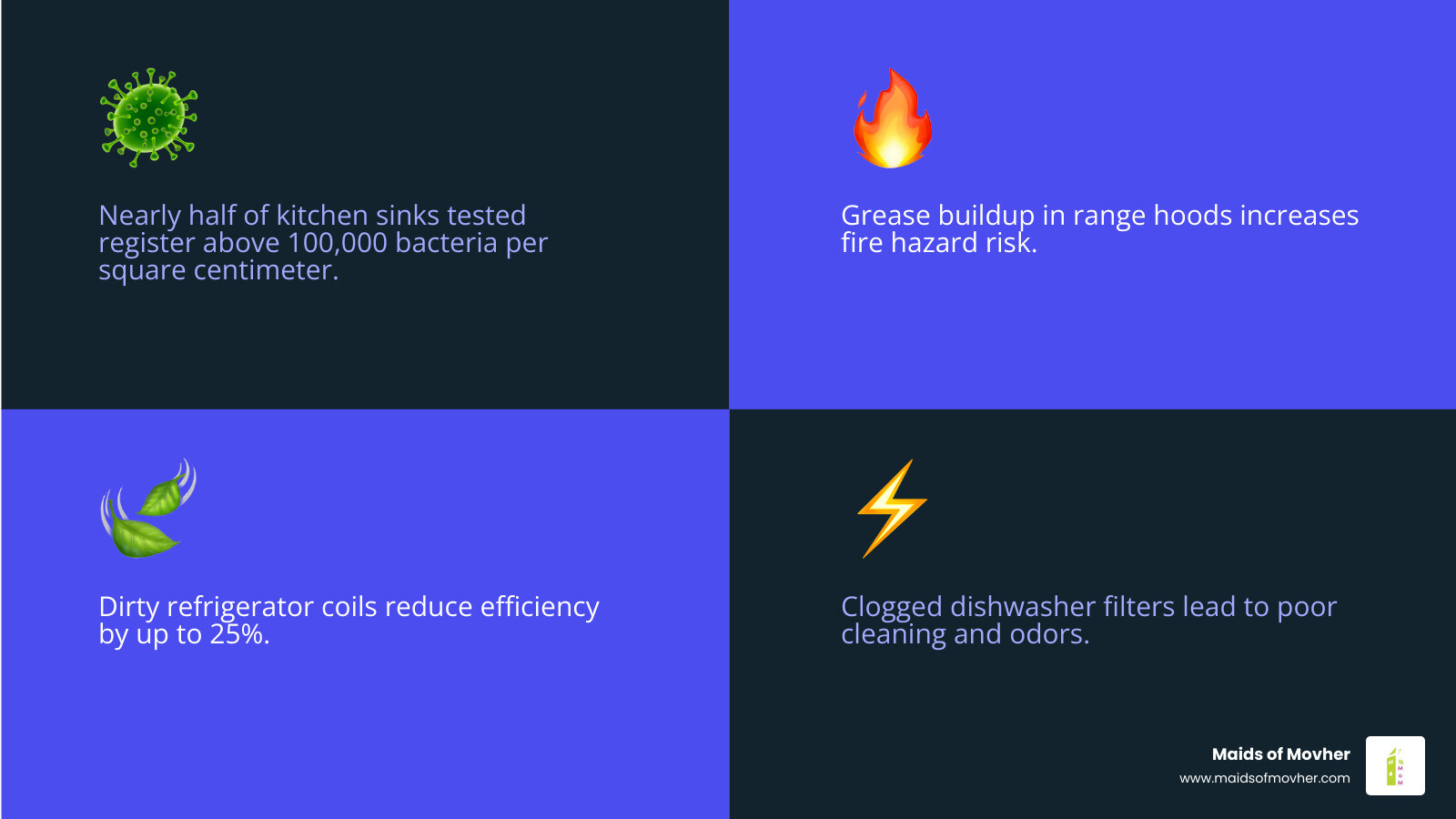
The numbers are striking. Research has found that nearly half of kitchen sinks tested in one international study registered above 100,000 bacteria per square centimeter. The appliances around that sink tell a similar story. Mold, grease, and food residue accumulate in places most people never think to check — behind the refrigerator, inside the dishwasher filter, under the microwave turntable — and over time, that buildup affects not just hygiene, but how well your appliances actually work.
A dirty refrigerator works harder to stay cold. A grease-clogged range hood can become a fire hazard. A scaled-up coffee maker produces weaker, worse-tasting coffee. The good news is that a systematic, room-by-room approach to cleaning doesn’t have to take an entire weekend or require harsh chemicals to get real results.
This guide walks you through every major kitchen appliance, step by step, so you know exactly what to clean, how to clean it, and how often to do it.
I’m Sabrina Jones, owner of Maids of Movher and a home services professional with over a decade of experience helping Spokane-area families maintain cleaner, healthier homes — including knowing exactly what it takes when deep cleaning kitchen appliances step by step for the best results. I’ve seen which methods actually work and which ones get skipped, and everything in this guide reflects that real-world experience.
The Impact on Health and Safety
We often think of our kitchens as the cleanest rooms in our homes, but the reality can be a bit more “terrifying” (as some of our clients put it when they first see behind their fridge!). Kitchen surfaces, specifically sinks, stoves, and sponges, are among the germiest areas in the home.
When we neglect the deep cleaning of our appliances, we invite several risks:
- Bacteria and Mold: Warm, damp environments like dishwashers and refrigerator gaskets are breeding grounds for bacteria.
- Foodborne Illness: Cross-contamination can occur if refrigerator shelves aren’t sanitized or if old food residue remains in the microwave.
- Fire Hazards: Grease buildup in range hoods and ovens is a leading cause of kitchen fires.
- Pathogen Growth: Nearly half of kitchen sinks tested above 100,000 bacteria per square centimeter, highlighting the need for regular disinfection of the surrounding appliances.
By following a professional Deep Cleaning Services routine, we can eliminate these hidden dangers and ensure our kitchens in Spokane and Liberty Lake remain safe for our families.
Maximizing Appliance Efficiency and Lifespan
Beyond health, deep cleaning is a financial win. When your appliances are clean, they don’t have to work as hard, which lowers your energy bills and delays the need for expensive replacements.
Consider these facts:
- Energy Savings: Clean refrigerator coils allow the unit to operate up to 25% more efficiently.
- Longevity: Professional deep cleaning can extend appliance lifespan by up to 40% by preventing mechanical strain.
- Performance: A descaled coffee maker heats more accurately, and a clean dishwasher drains faster.
| Appliance | Dirty State Impact | Clean State Benefit |
|---|---|---|
| Refrigerator | Coils clogged with dust; high energy use | 15-25% lower energy consumption |
| Oven | Built-up grease; uneven heating | Even cooking and lower fire risk |
| Dishwasher | Clogged filter; cloudy dishes | Spotless dishes and faster cycles |
| Range Hood | Grease-saturated filter; poor air flow | 75% better ventilation efficiency |
Essential Tools and Natural Solutions for a Deep Clean
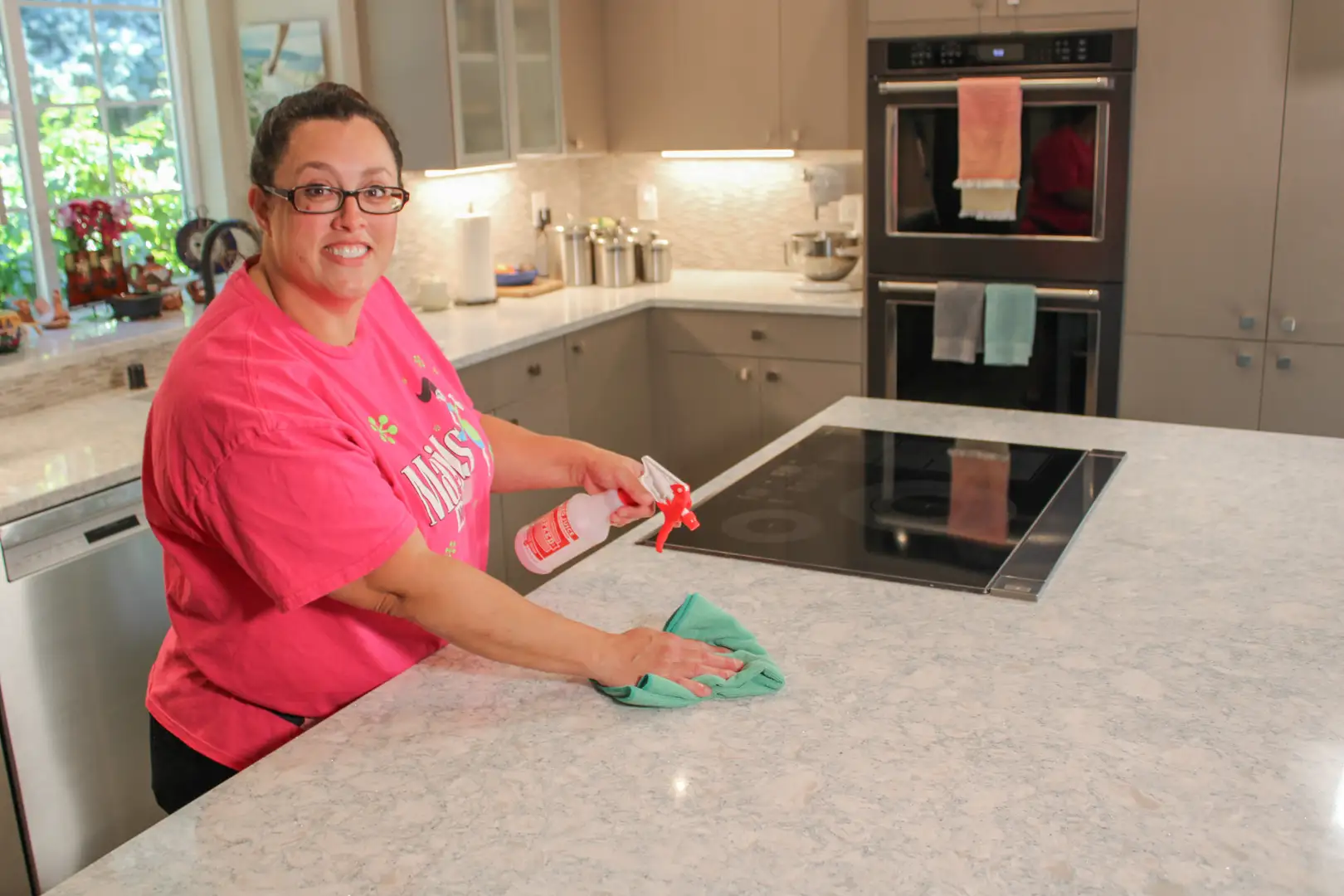
Before you dive into deep cleaning kitchen appliances step by step, you need the right kit. At Maids of Movher, we are big fans of eco-friendly cleaning. You don’t need a cabinet full of harsh chemicals to get a professional-grade sparkle.
DIY vs. Commercial Cleaners
Many homeowners are surprised to learn that a DIY all-purpose cleaner can cost 75% less than commercial cleaners. Not only is it cheaper, but it’s also safer for your pets and kids.
Our Essential Tool List:
- Microfiber Cloths: These are superior for trapping dirt and buffing stainless steel without scratching.
- Baking Soda: A mild abrasive perfect for scrubbing ovens and deodorizing fridges.
- White Vinegar: An excellent degreaser and descaler for coffee makers and dishwashers.
- Old Toothbrush: Essential for reaching into gaskets and small crevices.
- Vacuum with Brush Attachment: For those dusty refrigerator coils.
- Dish Soap: A simple degreasing powerhouse.
Check out our Deep House Cleaning Washington Guide for more tips on building your cleaning caddy.
Safety Precautions and Chemical Handling
Safety first! Even natural cleaners require care.
- Unplug Everything: Before you start scrubbing anything with an electrical cord, unplug it.
- Ventilation: Adequate ventilation reduces chemical exposure by up to 75%. Open the windows in your Airway Heights or Mead home to let the air circulate while you work.
- Gloves: Protect your hands from hot water and cleaning solutions.
- Test First: Always test a new cleaner on an inconspicuous area, especially on stainless steel or painted cabinets.
Deep Cleaning Kitchen Appliances Step by Step: The Major Machines
Now, let’s get into the nitty-gritty. Follow this Deep Cleaning Spokane Wa Guide sequence to make the most of your time.
Refrigerator and Freezer Maintenance
The fridge is a 24/7 workhorse. It deserves a deep clean every 3–6 months.
- Empty and Sort: Remove everything. Toss that salad dressing from 2024. Use a cooler for perishables if you’re doing a thorough job.
- Remove Shelves and Drawers: Wash these in the sink with warm soapy water. Pro Tip: Let glass shelves come to room temperature before washing to prevent cracking!
- Wipe the Interior: Use a mix of 1 part vinegar to 2 parts water. Start from the top and work your way down.
- Sanitize Gaskets: Use a toothbrush and soapy water to clean the rubber door seals. A thin layer of Vaseline can keep them supple and airtight.
- Clean the Coils: Pull the fridge out and vacuum the condenser coils at the back or bottom. Clean refrigerator coils operate 25% more efficiently.
Deep Cleaning Kitchen Appliances Step by Step: The Oven and Stovetop
Cleaning the oven is rarely on anyone’s “fun list,” but it’s vital for food flavor and safety.
- The Oven Interior: If you prefer natural methods, skip the high-heat self-clean cycle (which can sometimes damage heating elements). Instead, make a paste of baking soda and water. Spread it everywhere except the heating elements. Let it sit overnight (12 hours). Spritz with vinegar the next morning—it will fizz and loosen the grime—then wipe away.
- Oven Racks: Soak them in a bathtub with hot water and dish soap for two hours, then scrub with a stiff brush.
- Stovetop Grates: For gas stoves, soak the grates and burner caps in hot, soapy water. For electric coils, wipe them down with a damp cloth but never submerge the electrical connections.
- Glass Cooktops: Use a specialized scraper for burnt-on bits and buff with a microfiber cloth for a streak-free finish.
Deep Cleaning Kitchen Appliances Step by Step: The Dishwasher Refresh
Yes, the machine that cleans needs to be cleaned itself!
- Clear the Drain: Remove the bottom rack and look for any food debris trapped in the drain.
- The Filter: Most modern dishwashers have a manual filter. Dishwasher filters should be cleaned monthly to prevent odors. Rinse it under hot water and use a toothbrush to remove any slime.
- The Vinegar Cycle: Place a bowl of white vinegar on the top rack and run a hot cycle. This removes limescale and grease.
- Baking Soda Rinse: Sprinkle a cup of baking soda on the bottom and run a short hot cycle to freshen the scent.
Tackling Small Appliances and Ventilation Systems
Small appliances are often the most neglected, yet they are the ones we use every single morning.
Microwave and Range Hood Care
The microwave is prone to “splatter-geddon.”
- The Steam Method: Place a bowl of water with lemon slices or a splash of vinegar inside. Microwave for 3–5 minutes until it steams. Let it sit for 5 minutes. The grime will wipe right off!
- Range Hood Filters: These are grease magnets. Remove the mesh or baffle filters and soak them in boiling water with plenty of dish soap or a degreaser for 20 minutes. Scrub, rinse, and dry. If you have a charcoal filter, those cannot be cleaned—they must be replaced every 6 months.
Small Appliance Maintenance
- Coffee Maker: Descale every 3 months. Run a cycle with half vinegar and half water, followed by two cycles of plain water.
- Toaster: Unplug it and shake it over the sink. Don’t forget to slide out and wash the crumb tray!
- Blender: Fill it halfway with warm water and a drop of dish soap. Run it for 30 seconds, rinse, and it’s sanitized.
Garbage Disposal and Sink Hygiene
If your sink smells, the disposal is likely the culprit.
- Scrub the Flap: Use an old toothbrush and soapy water to scrub the underside of the rubber splash guard. This is where most bacteria hide.
- The Ice Trick: Toss in a few ice cubes and a handful of kosher salt. Run the disposal with cold water. The ice sharpens the blades and knocks off debris.
- Freshen Up: Finish by grinding up some lemon or orange peels for a fresh, citrusy scent.
For more details on keeping your kitchen surfaces pristine, see our Deep Cleaning Spokane Valley Guide.
Frequently Asked Questions about Appliance Cleaning
We get a lot of questions from our neighbors in Spokane and Liberty Lake about the best ways to keep their kitchens sparkling. Here are the most common ones.
How often should I deep clean my kitchen appliances?
Deep cleaning a kitchen typically takes 4-6 hours and should be performed every 3-4 months. However, if you are an avid baker or have a large family, you might find that a bi-monthly schedule works better to prevent grease buildup from becoming overwhelming.
Is it safe to use bleach inside a refrigerator?
We generally recommend against using bleach inside a refrigerator. Bleach is a harsh chemical that can taint food if not rinsed perfectly. Since the fridge is an enclosed space, the fumes can also be overwhelming. Stick to soap and water or a vinegar-water solution for a safer, food-contact-friendly clean.
How do I remove stubborn grease from kitchen cabinets?
Sticky grease on cabinets near the stove is a common headache.
- Dwell Time: Apply a mix of dish soap and warm water (or a dedicated degreaser) and let it sit for 2–3 minutes.
- Circular Scrubbing: Use a soft sponge or microfiber cloth in circular motions.
- Dry Thoroughly: Always dry wood cabinets immediately with a clean cloth to prevent moisture damage.
- Test First: Always test in an inconspicuous area to ensure the finish doesn’t peel.
Conclusion
At Maids of Movher, we believe a clean home is a happy home. As a locally and woman-owned business, we take pride in helping our Spokane, Spokane Valley, Mead, Airway Heights, and Liberty Lake neighbors reclaim their weekends. Our employee-first philosophy means our team is happy, well-paid, and dedicated to making your home shine.
Whether you need a one-time deep clean or recurring help, we’re here to help you enjoy your life while we handle the grime. We are also proud partners with Cleaning for a Reason, providing free cleaning services to cancer patients in our community.
Ready to give your kitchen the reset it deserves? Let us help you keep your home healthy and efficient. We’ve been Making Homes Sparkle Since 2010, and we’d love to bring that sparkle to yours!
