
Why a Little Preparation Goes a Long Way Toward a Cleaner Home
If you’ve ever come home after a cleaning visit and felt like something was still off, you’re not alone. Knowing how to help your cleaner do a better job is one of the simplest things you can do to get more out of every single visit — and most of it takes less than 15 minutes.
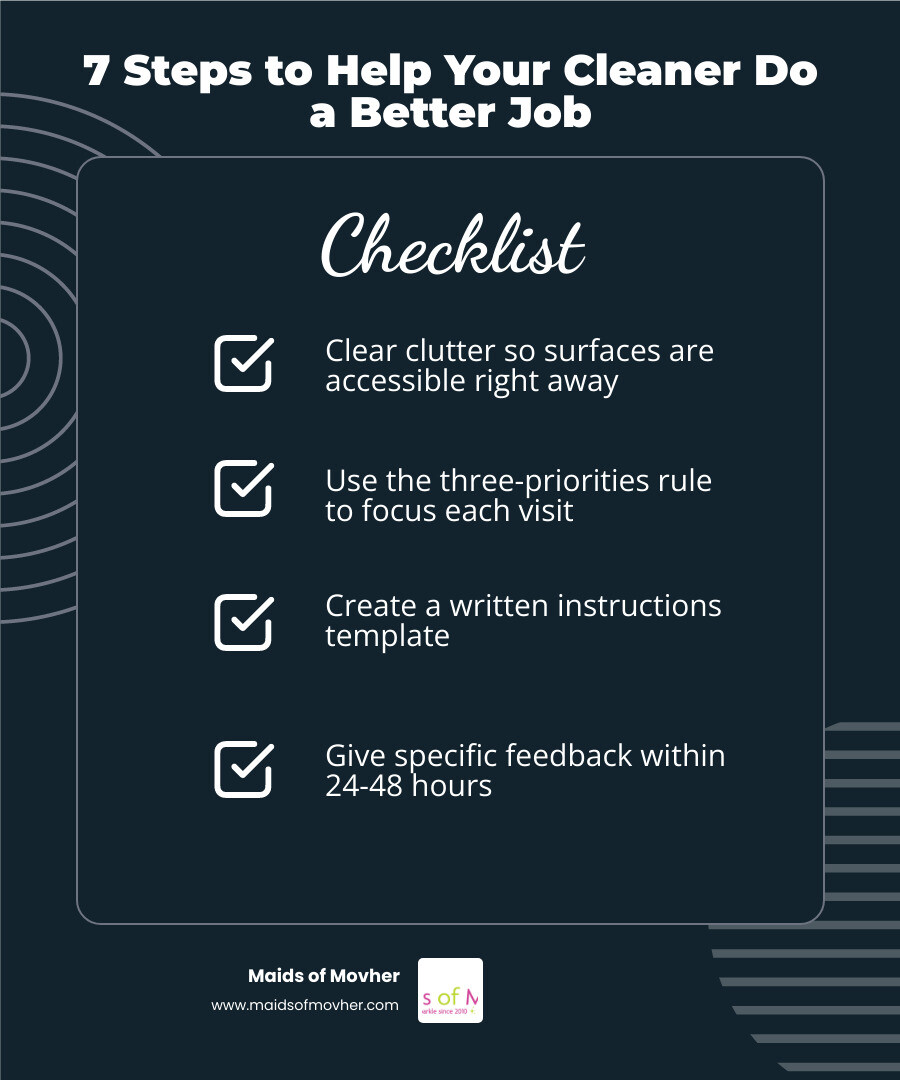
Here are the seven steps covered in this guide:
- Clear the clutter so cleaners can access surfaces immediately
- Use the three-priorities rule to focus each visit on what matters most
- Create a written instructions template so nothing gets lost in translation
- Set clear expectations based on the type of service you’ve booked
- Give specific feedback within 24 to 48 hours when something is missed
- Communicate schedule changes early so your cleaner can plan accordingly
- Maintain mutual respect and professional boundaries for a lasting relationship
Most cleaning disappointments don’t come from a cleaner doing a bad job. They come from unclear priorities, surfaces buried under clutter, and expectations that were never actually shared. Research shows that spending money on time-saving services like professional cleaning leads to greater happiness than spending the same money on material goods — yet only 2% of people in one study chose to spend a financial windfall on time-savers. That gap often comes down to not knowing how to make the most of the service once you have it.
When you take a few small steps to prepare and communicate, you free your cleaner to do what they do best: deep-clean your home instead of navigating around clutter or guessing which rooms matter most to you today.
I’m Sabrina Jones, owner of Maids of Movher and a home services entrepreneur based in Spokane, Washington, with over a decade of hands-on experience helping busy families get more value from professional cleaning. The strategies in this guide reflect what I’ve seen work — and what doesn’t — when it comes to how to help your cleaner do a better job in real homes, with real schedules. Read on for a practical, step-by-step breakdown you can start using before your very next visit.
1. Clear the Clutter to Let Surfaces Shine
There is a massive difference between “decluttering” and “deep cleaning,” and understanding this distinction is the absolute first step in learning how to help your cleaner do a better job. Your cleaning professional is there to scrub, sanitize, vacuum, and dust. They are not there to organize your mail, sort through your children’s art supplies, or decide which shoes belong in the closet.
When a cleaner arrives to find countertops covered in beauty products, kitchen tables buried under paperwork, and floors littered with toys, they are forced to make a choice. They must either spend their limited time moving these items into piles just to reach the surfaces, or they have to clean around them. Neither option is ideal. In fact, industry data shows that just 15 minutes of focused homeowner preparation can save your cleaning professional between 30 to 45 minutes of tidying time. That is nearly three-quarters of an hour that could be spent on deep-cleaning tasks like scrubbing baseboards or polishing your stainless steel appliances.
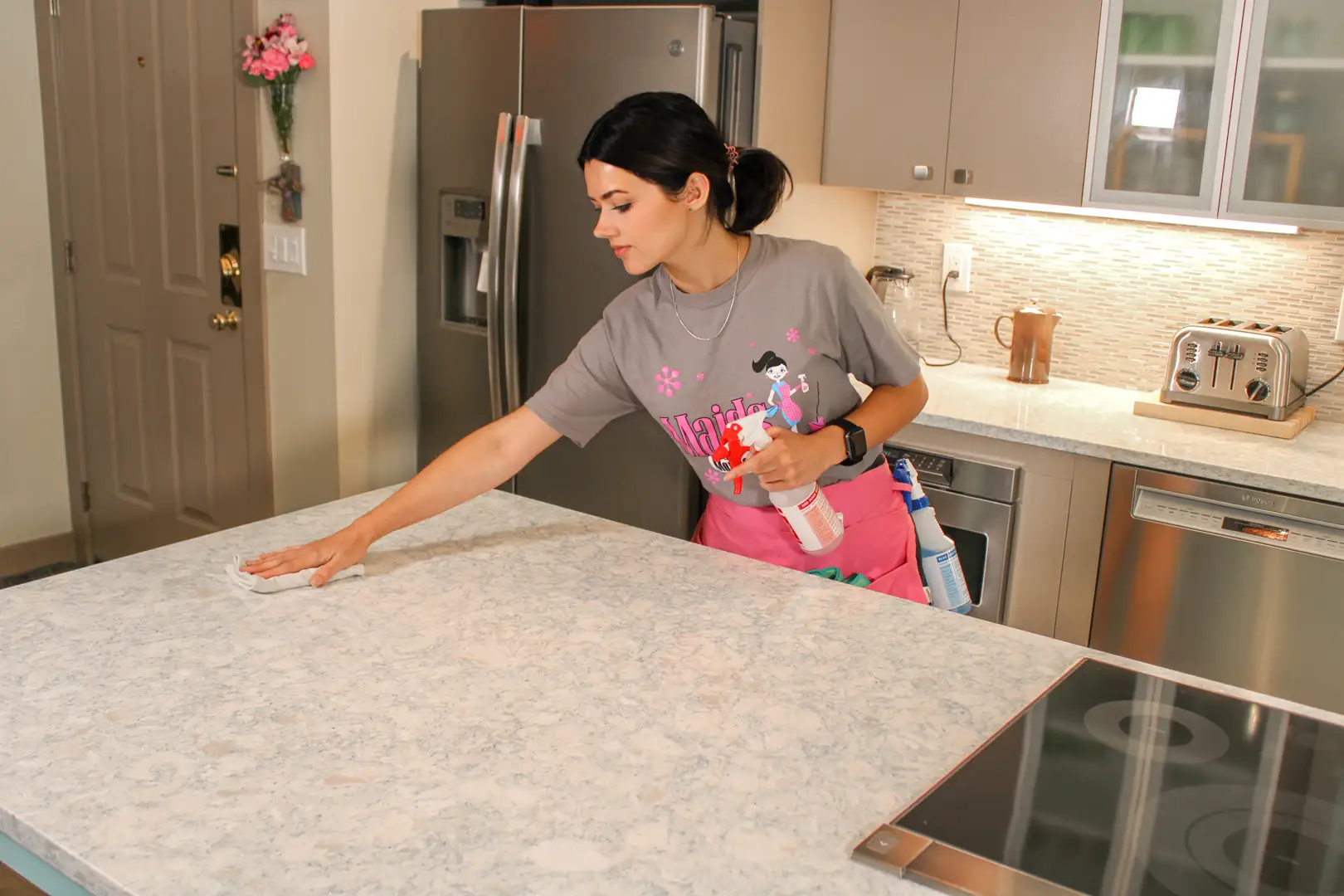
To make surface access as seamless as possible, we highly recommend using the “clutter basket” method the night before your scheduled visit. Walk through your home with an empty laundry basket or storage bin. Collect anything that doesn’t belong on a flat surface — stray toys, unopened mail, dirty clothes, and random knick-knacks — and store the basket in an off-limits area like your closet or garage.
By clearing these surfaces ahead of time, you allow your cleaner to get straight to work with their microfiber cloths and plant-based cleaners. If you want to dive deeper into how to get your home ready for a seamless visit, check out our guide on How to Prepare Your Home for the Cleaner Even If You’ve Never Tried It Before to build a stress-free routine. When you Clear the Clutter Before the Cleaner So Your Surfaces Can Shine, you are directly buying yourself a higher-quality clean.
2. Master the Three-Priorities Rule for Clear Communication
One of the most common communication mistakes homeowners make is giving their cleaner a massive, unrealistic checklist for a standard maintenance visit. When a cleaner is handed a list of twenty different tasks for a three-hour appointment, the sheer volume of information creates noise. Rather than doing a spectacular job on your highest-value areas, they are forced to rush through everything just to check the boxes.
To prevent this, we recommend mastering the “Three-Priorities Rule.” For every scheduled visit, narrow your communication down to exactly three points of focus. This simple, repeatable framework prevents information overload and gives your cleaner clear direction on how to allocate their time.
How to Help Your Cleaner Do a Better Job with a 3-Priority List
The magic of the three-priority list lies in its structure. Instead of vague requests like “please clean the house well,” structure your three priorities like this:
- Priority 1 (The Most-Important Zone): This is the one area that must be absolutely flawless. For example: “Please spend extra time deep-cleaning the master bathroom grout today.”
- Priority 2 (The Extra-Attend Item): A specific task that might not be part of the standard rotation but needs attention this week. For example: “Please wipe down the baseboards in the high-traffic entryway.”
- Priority 3 (The Thing to Skip): To give your cleaner the time they need for Priorities 1 and 2, tell them what they can skip. For example: “You can skip the guest bedroom entirely today, as no one has used it since your last visit.”
The best way to deliver this list is via a quick text message the day before the visit, or by leaving a brief, bulleted note on the kitchen island. This gives your cleaner a written reference they can consult as they work, ensuring your priority zones get the exact level of attention they deserve.
3. Create a Written Cleaning Instructions Template
Relying solely on verbal instructions is a recipe for frustration. A verbal preference shared during an initial walkthrough months ago is easily forgotten, especially as routines settle in. To build a long-term, successful relationship with your cleaner, you need a written cleaning instructions template.
This document acts like a standing order at your favorite coffee shop — it keeps your preferences consistent without requiring you to repeat them every single week. It also provides essential legal and practical protection for your home. For example, if you have unsealed marble countertops that can be permanently etched by acidic cleaners like vinegar, writing this down in a formal “surface restrictions” section protects your property and gives your cleaner clear boundaries.
Additionally, this template should cover security logistics (such as lockbox codes or alarm instructions) and clear pet safety protocols. If you have a dog that gets stressed by the sound of high-powered vacuums, your template can instruct the cleaner to keep the dog secured in the laundry room or backyard while they work.
Before you build your document, you might wonder: Should You Clean Before the Cleaners Come? to make sure they can follow your instructions properly? Read our breakdown to understand where to draw the line between helpful prep and unnecessary work.
To help you understand how a cleaning instructions template differs from a standard checklist, we’ve broken down the key differences below:
| Feature | Standard Cleaning Checklist | Written Instructions Template |
|---|---|---|
| Primary Purpose | Lists what tasks need to be completed. | Details how those tasks must be performed. |
| Customization | Generic list of rooms and standard chores. | Highly customized to your home’s unique surfaces and rules. |
| Safety Details | Rarely includes pet safety or alarm codes. | Explicitly details pet protocols, gate codes, and alarm steps. |
| Surface Rules | Assumes standard cleaning products are fine. | Flags restrictions (e.g., “Do not use vinegar on granite”). |
| Update Frequency | Stays the same from visit to visit. | Updated every 3 to 6 months as household needs change. |
Using a Household Manual to Help Your Cleaner Do a Better Job
If you want to take your household organization to the next level, compile your template into a simple, two-page “Household Manual.” Keep a laminated copy of this manual in a highly visible, consistent location — such as inside a pantry door or in a kitchen drawer.
Make sure your manual includes an “Update Log” at the very end. When you make changes to your home — like installing new hardwood floors in July 2026 or adopting a new pet — you can quickly note the date and the new instruction. This ensures that even if a different team member steps in to cover a visit, they will have instant access to your home’s non-negotiable rules and product preferences without you having to train them from scratch.
4. Establish Clear Expectations for Different Service Types
A major source of homeowner dissatisfaction comes from expecting deep-clean results during a standard maintenance visit. To help your cleaner succeed, you must align your expectations with the specific type of service you have booked.
A regular, recurring cleaning service is designed for maintenance. During a standard two-to-three-hour visit, a professional cleaner focuses on high-touch surfaces, basic vacuuming, mopping, dusting, and sanitizing bathrooms and kitchens. They do not have the time to pull out heavy appliances, hand-wash baseboards, clean inside the oven, or wipe down individual window tracks. Expecting these tasks to be completed during a standard visit only sets both you and your cleaner up for disappointment. If your home has built-up grime, you should always start with a professional deep clean first to establish a clean baseline.
It is also vital to understand who you are hiring. To make an informed decision, read about The Honest Truth About Hiring an Independent Cleaner vs. a Cleaning Company. While an independent cleaner may offer a highly personalized approach, a professional, locally-owned company like Maids of Movher provides bonded and insured teams, extensive training, and a reliable “we’ll make it right” satisfaction guarantee.
Once you decide on the right fit for your home, take a moment to Stop Watching the Clock and Learn What to Expect During a Maid Visit. Understanding the flow of a professional cleaning visit will keep you from hovering and help you trust the process.
5. Provide Constructive Feedback Within 24 to 48 Hours
Even the most experienced cleaning professionals can occasionally miss a spot. When this happens, how you handle the feedback process will determine whether your relationship with your cleaner thrives or deteriorates.
The golden rule of feedback is timing: always share your notes within 24 to 48 hours of the visit. Professional cleaners work in multiple homes every week; if you wait ten days to mention a missed dusty shelf, they won’t remember the context of that specific visit. Sharing feedback quickly allows the details to stay fresh and gives your cleaning service the opportunity to make corrections. At Maids of Movher, we offer a dedicated feedback window because we want to address any issues immediately.
When giving feedback, use the “compliment sandwich” method. Start with something that looked fantastic, transition into the specific area that needs improvement, and close with a note of appreciation.
Instead of vague, discouraging statements like, “The house didn’t look very clean today,” use specific, task-focused language:
- “Thank you so much for the wonderful job you did on the kitchen counters — they look absolutely beautiful! I did notice that the dusting on the living room blinds was missed this time. Could we make sure those get a quick wipe-down during our next visit? We truly appreciate all your hard work!”
This approach keeps the dialogue positive, collaborative, and focused on maintaining high standards without making your cleaner feel unappreciated.
6. Manage Schedule Changes and Evolving Household Needs
A clean home is not a static environment; your household needs will naturally shift throughout the year. To help your cleaner maintain consistent standards, you must proactively manage these changes.
We recommend conducting a quick “priority audit” every three to six months. Think about how your home’s usage changes with the seasons. In the wet winter months in Spokane, you might want to redirect your cleaner’s focus toward the high-traffic mudroom and entryway floors to tackle tracked-in snow and salt. In the summer, you might deprioritize those entryways and request extra dusting to combat seasonal pollen.
If you have major schedule changes — such as hosting out-of-town guests, planning a home renovation, or leaving for a family vacation — give your cleaning service as much advance notice as possible. If you need extra tasks completed before a big event, reach out early so they can adjust their schedule and allocate the necessary time. Asking for “just one more quick thing” when your cleaner is already walking out the door stresses their schedule and compromises the quality of their work.
7. Maintain Professional Boundaries and Respect
At the end of the day, the single most effective way to help your cleaner do a better job is to treat them with the respect and professional dignity they deserve. Cleaning is highly physical, demanding work that requires skill, stamina, and attention to detail.
Maintaining professional boundaries means giving your cleaner the space they need to work. While a warm greeting is always appreciated, avoid hovering or engaging in long conversations while they are on the clock. Every minute spent chatting is a minute taken away from cleaning your home.
Furthermore, respect your cleaner’s professional limits. Do not ask them to handle biohazards (such as pet waste) or move incredibly heavy furniture, as these tasks pose serious health and safety risks.
At Maids of Movher, we believe that happy employees do the best work. That is why we are committed to being a locally- and woman-owned business that pays the highest wages in the Spokane area, operates without night or weekend shifts, and treats cleaning as a respected career rather than just a job. When you partner with a service that values its team, you receive consistent, reliable service from professionals who are genuinely motivated to make your home sparkle.
How to Help Your Cleaner Do a Better Job: Frequently Asked Questions
Should I wash the dishes before my cleaner arrives?
Yes, we highly recommend clearing your sink of dirty dishes before your cleaner arrives. Standard cleaning services do not include washing a sink full of dishes, and some companies may charge an extra fee for this time-consuming task. More importantly, leaving dishes in the sink prevents your cleaner from thoroughly scrubbing and sanitizing the sink basin itself. Clearing the clutter from your sink allows them to leave your entire kitchen looking polished and clean.
What should I do if a specific priority is missed?
If a priority is missed, contact your cleaning service or cleaner within 24 hours. Use clear, constructive language to point out the specific area, and refer back to your written checklist to make sure the instruction was clear. A professional service will welcome this feedback and work quickly to make it right.
How often should I update my cleaning instructions?
You should review and update your cleaning instructions template every 3 to 6 months, or immediately following any major household changes. This includes home renovations (like adding new hardwood or delicate stone surfaces), welcoming a new pet, changing your home access codes, or adjusting your schedule for different seasons.
Conclusion
At Maids of Movher, we have been making homes sparkle across Spokane, Spokane Valley, Mead, Airway Heights, and Liberty Lake since 2010. Our mission is simple: to brighten your home with superior service, integrity, and trust, giving you back your weekends to spend with family, catch up on your favorite book, or simply relax.
By taking just a few minutes to clear the clutter, communicate your top three priorities, and maintain a written guide, you build a true partnership with your cleaning professional. When you help your cleaner succeed, you get to enjoy the ultimate reward: a beautifully clean, stress-free home that truly feels like a sanctuary.
Ready to experience the difference that clear communication and professional care can make? Explore our recurring cleaning services today and let us handle the hard work for you!
