
Why Traditional Cleaning Agents Pose Risks to Small Bodies
Are professional cleaning products safe for pets and kids? The short answer is: it depends on what products are being used and how they’re applied. Here’s a quick breakdown:
- Reputable professional services often use EPA Safer Choice or Green Seal certified products that are formulated to be non-toxic and residue-free
- Key chemicals to avoid include ammonia, chlorine bleach, phenols, formaldehyde, phthalates, and synthetic fragrances
- Pets and toddlers face the highest risk because they spend time on floors, groom themselves, and put hands or paws in their mouths
- Signs of chemical exposure in pets and children include vomiting, coughing, skin irritation, and lethargy
- Safer options exist — plant-based, biodegradable, and pH-neutral formulas can clean effectively without leaving harmful residues
Your home looks spotless. But is it actually safe?
That’s the question more Spokane families are asking — and for good reason. According to the ASPCA Animal Poison Control Center, household cleaning products are involved in 8.3% of all pet poison calls. A 2020 study published in the Canadian Medical Association Journal also found that frequent use of conventional cleaners can increase asthma and respiratory risks in young children. The products that make your counters shine and your floors gleam can leave behind invisible chemical residues — ones your toddler crawls through and your dog walks across before licking their paws clean.
It’s not about choosing between a clean home and a safe one. It’s about knowing what’s actually in the products being used — and whether the people cleaning your home have made safety a real priority.
I’m Sabrina Jones, owner of Maids of Movher and a multi-million dollar home services entrepreneur based right here in Spokane, Washington, with over a decade of experience building cleaning operations that families genuinely trust. Understanding are professional cleaning products safe for pets and kids has been central to how I’ve built and operated my business, and in this guide I’ll walk you through everything you need to know to protect the people — and animals — you love most.
When we talk about home safety, we often think of baby gates and outlet covers. However, the chemical makeup of what we use to mop our floors is just as critical. Children and pets are uniquely vulnerable to toxic exposure for several physiological and behavioral reasons.
First, consider their proximity to the ground. Toddlers spend a significant portion of their day crawling, sitting, and playing on the floor. Pets, of course, live there 24/7. This puts them in direct contact with animal-safe cleaning products washington (or the lack thereof) every single day.
Furthermore, their respiratory rates are much faster than ours. A dog or a small child breathes in more air per pound of body weight than an adult, meaning they inhale higher concentrations of volatile organic compounds (VOCs) lingering in the air after a cleaning session. Their skin is also thinner and more absorbent, making it easier for harsh residues to enter their bloodstream.
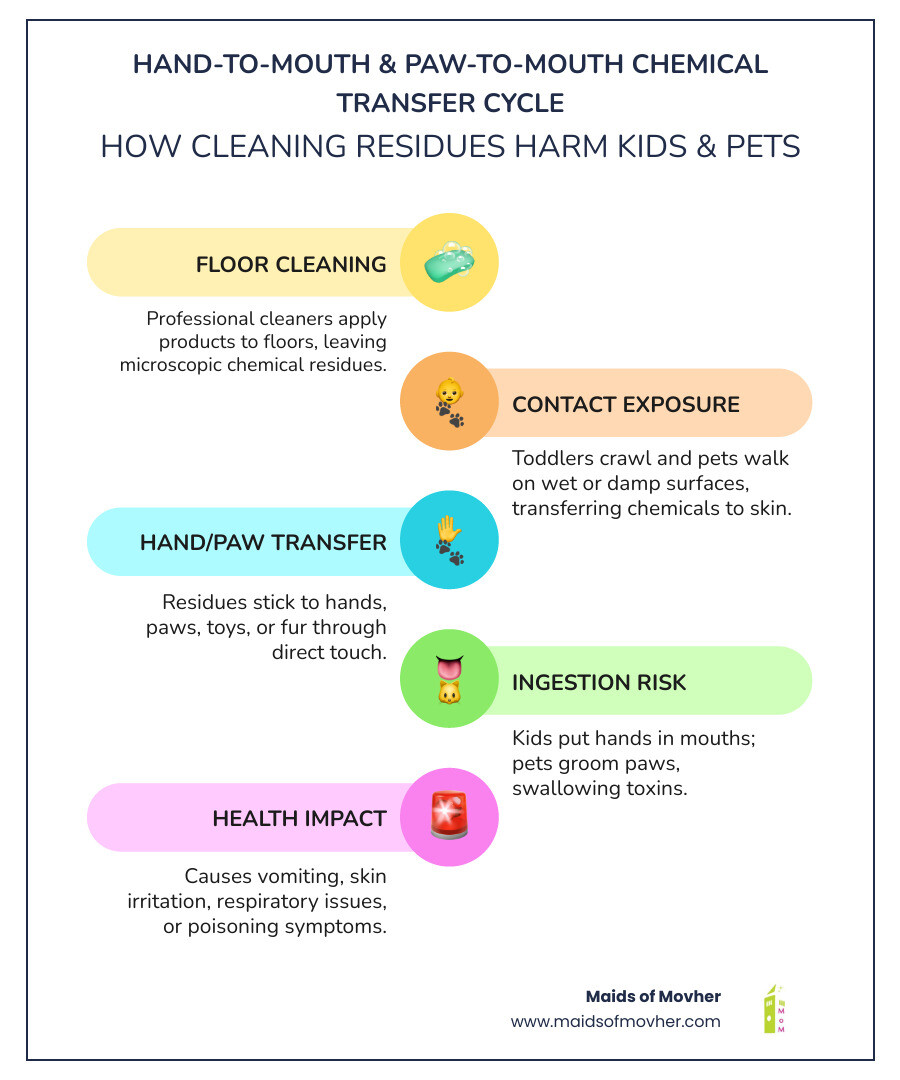
The “Hand-to-Mouth” and “Paw-to-Mouth” cycle is perhaps the biggest danger. A 2020 study in the Canadian Medical Association Journal highlighted that frequent use of conventional cleaners increases asthma risks in kids. For pets, the risk is even more immediate: they walk across a damp floor, the chemicals stick to their paws, and they ingest those toxins while grooming.
Common Chemicals to Avoid for Family Safety
To truly answer if are professional cleaning products safe for pets and kids, we have to look at the ingredient list. Many “industrial strength” cleaners used by low-cost services contain ingredients that should stay far away from your living room.
- Ammonia: Commonly found in glass cleaners, it is a major respiratory irritant. It is particularly dangerous for birds and can cause lung damage in dogs and cats.
- Chlorine Bleach: While great for killing germs, it is highly corrosive. It can cause skin burns and, if accidentally mixed with other cleaners (like vinegar or ammonia), can create toxic gases that are potentially fatal.
- Phenols: Often found in floor cleaners and disinfectants (especially those that turn milky in water). Cats are especially sensitive to phenols because their livers cannot process them effectively.
- Phthalates: These are often hidden under the word “fragrance” on a label. They are known endocrine disruptors that can affect hormonal health in both humans and animals.
- Formaldehyde: Used as a preservative in some detergents, it is a known carcinogen and a common trigger for asthma and allergies.
- Glycol Ethers: Found in some all-purpose cleaners, these have been linked to anemia and lung damage in pets.
Are Professional Cleaning Products Safe for Pets and Kids?
The good news is that the professional cleaning industry has evolved. While “old school” cleaners might still rely on the harsh chemicals listed above, modern, high-quality services have shifted toward “Green Chemistry.”
When evaluating if a service is safe, look for third-party certifications. Labels like EPA Safer Choice or Green Seal aren’t just marketing—they mean the product has been rigorously tested for human and environmental safety. These products are designed to be biodegradable and non-toxic while still providing the “heavy-duty” results you expect from a pro.
You can learn more about what to look for in our safe house cleaning products washington guide.
Conventional Store-Bought vs. Eco-Friendly Professional Solutions
| Feature | Conventional Store-Bought | Eco-Friendly Professional |
|---|---|---|
| Active Ingredients | Ammonia, Bleach, Phthalates | Plant-based surfactants, Citric acid |
| Residue | Often leaves a sticky, chemical film | Designed to be residue-free |
| Scent | Heavy synthetic fragrances | Naturally derived or fragrance-free |
| Safety Certifications | Rarely third-party verified | EPA Safer Choice, Green Seal |
| Respiratory Impact | High VOCs (Asthma trigger) | Low to Zero VOCs |
How Professional Services Ensure Products are Safe for Pets and Kids
It’s not just what we use, but how we use it. Professional cleaners who care about your family’s health use specific protocols to minimize risk. This includes precise commercial dilution systems that ensure chemicals are never used at concentrations higher than necessary.
We also use specialized equipment, like HEPA-filter vacuums, which trap allergens rather than blowing them back into the air. By using pH-neutral cleaners and plant-based surfactants, we can achieve a deep clean that doesn’t leave behind a “sticky” floor that attracts dirt and traps toxins. For more details on these methods, check out our pet friendly cleaning washington guide.
Effective Non-Toxic Alternatives Used by Experts
Professional-grade cleaning doesn’t require harsh toxins. Experts often use these effective, safer alternatives:
- Enzymatic Cleaners: These use natural proteins to “eat” organic stains and odors (like pet accidents) at the molecular level, rather than just masking them with perfume.
- Hypochlorous Acid (HOCl): A powerful disinfectant that is actually produced by the human immune system to fight infection. It is highly effective but safe enough to be used around food and pets.
- Citric Acid: Derived from citrus fruits, this is excellent for breaking down soap scum and hard water stains without the fumes of traditional acid cleaners.
- Essential Oil Blends: Oils like lavender and eucalyptus provide a natural scent and mild antibacterial properties without the hormone-disrupting effects of phthalates.
Essential Safety Protocols for a Healthy Home Environment
Even when using the safest products, we believe in a “safety first” approach. Proper protocols ensure that the cleaning process itself doesn’t cause stress or irritation for your little ones.
Ventilation is key. We always recommend keeping a few windows cracked, even in the Spokane winter, to ensure fresh air circulation. This helps any moisture or natural scents dissipate quickly.
Another vital step is ensuring surfaces are completely dry before allowing pets or children back into the area. Most plant-based cleaners dry within 15 to 30 minutes. Keeping toys and pet bowls in a “safe zone” or a closed cupboard during the cleaning process prevents any accidental overspray from landing where it might be ingested.
You can find more practical advice in our pet owner cleaning service washington tips.
Identifying Symptoms of Exposure in Children and Pets
Despite our best efforts, accidents can happen—especially if you’ve used a new store-bought product or hired a service that isn’t transparent about their ingredients. It’s important to know the red flags.
In pets, symptoms of chemical irritation or ingestion include:
- Excessive drooling or foaming at the mouth
- Vomiting or diarrhea
- Red, itchy, or blistered skin (especially on paw pads)
- Coughing or labored breathing
- Lethargy or unusual hiding behavior
In children, watch for:
- Watery, red eyes
- Unexplained coughing or wheezing
- Skin rashes or “hot spots”
- Nausea
If you suspect exposure, contact your veterinarian or the ASPCA Animal Poison Control Center (888-426-4435) immediately. For children, contact your pediatrician or the national Poison Control hotline.
Choosing the Right Help for Your Spokane Home
At Maids of Movher, we aren’t just a cleaning company; we are members of the Spokane and Spokane Valley community. As a woman-owned business, we understand that your home is your sanctuary. We’ve built our reputation on being reliable and consistent, but most importantly, on being safe.
Whether you are in Mead, Airway Heights, or Liberty Lake, our commitment remains the same: we treat your home like our own. We hire happy, well-paid employees who are trained in safety protocols, ensuring that your kids and pets are always in good hands. For more specific advice for our canine-loving neighbors, see our dog owner cleaning service washington tips.
Questions to Ask Before Hiring a Service Regarding if Professional Cleaning Products are Safe for Pets and Kids
Don’t be afraid to interview your cleaning service! A reputable company will be happy to answer these questions:
- Can you provide Safety Data Sheets (SDS) for your products? These documents detail the health risks and ingredients of every chemical used.
- Do you use EPA Safer Choice or Green Seal certified products?
- Are your products fragrance-free or naturally scented? (Avoid those that just say “fragrance”).
- What is your protocol for pet-heavy households?
- How do you train your technicians on cross-contamination? (Using the same cloth for the toilet and the kitchen counter is a major safety no-no).
For more tips on maintaining a healthy home between professional visits, read our guide on how to keep home clean with pets.
Frequently Asked Questions
Can pets get sick from licking floors cleaned with professional products?
Yes, if the products contain harsh residues like bleach, ammonia, or phenols. However, if the professional service uses pH-neutral, plant-based cleaners and allows them to dry completely, the risk is virtually zero. Always ensure the floor is dry before letting your pet back into the room.
How long should kids stay away from a freshly cleaned room?
We generally recommend the “30-minute rule.” This allows enough time for surfaces to dry and for any airborne particles to settle or be ventilated out. If the service uses high-VOC cleaners, this time may need to be much longer, which is why we opt for low-VOC solutions.
Are “natural” cleaners always safer than professional ones?
Not necessarily. “Natural” is an unregulated term in the cleaning industry. For example, certain essential oils (like tea tree or peppermint) are “natural” but can be toxic to cats and dogs if used in high concentrations. Professional-grade eco-friendly products are often safer because they are formulated based on scientific safety standards and proper dilution ratios.
Conclusion
A clean home should be a source of peace, not a source of worry. By choosing a service that understands the unique needs of Spokane families—and the unique vulnerabilities of their smallest members—you can enjoy a spotless house without compromising on health.
Protecting your family starts with making informed choices about the chemicals allowed into your home. From Airway Heights to Liberty Lake, we are here to help you create a space that is truly clean, from the inside out.
Looking for pet-friendly home cleaning services? Any suggestions in Spokane? Give us a call at Maids of Movher—we’d love to show you how safe and effective a professional clean can be.
