
Why Mold and Mildew Keep Coming Back in Your Bathroom (And How to Stop Them)
How to prevent mold and mildew in bathroom surfaces comes down to a few core habits: control moisture, improve ventilation, clean regularly, and fix leaks fast. Here is a quick-reference summary:
- Ventilate – Run your exhaust fan during and for at least 30 minutes after every shower
- Dry surfaces – Squeegee walls and wipe down wet areas after each use
- Control humidity – Keep indoor humidity between 30 and 50 percent
- Clean weekly – Use vinegar, hydrogen peroxide, or a non-abrasive bathroom cleaner
- Fix leaks fast – Repair dripping faucets and cracked grout before moisture builds up
- Dry your stuff – Hang towels, bath mats, and shower curtains so they dry fully between uses
- Use mold-resistant materials – Choose waterproof paint and sealed grout for long-term protection
It creeps up on you. One week your bathroom looks fine, and the next you are spotting dark patches on the grout, ceiling, or behind the shower curtain. Bathrooms are one of the most mold-prone spaces in any home because they combine the three things mold loves most: warmth, moisture, and poor airflow. Left unchecked, mold and mildew are not just an eyesore. They can trigger allergic reactions, worsen asthma, and cause real damage to your walls and surfaces over time.
The good news? Most bathroom mold is completely preventable with the right routine and a few smart upgrades.
I’m Sabrina Jones, owner of Maids of Movher and a home services professional with over a decade of hands-on experience helping Spokane families maintain clean, healthy homes – including tackling the recurring bathroom mold issues that so many households face. My team knows that understanding how to prevent mold and mildew in bathroom spaces is one of the most impactful things you can do for your home’s hygiene and your family’s health. Let’s walk through exactly how to do it.
Understanding What Causes Mold and Mildew to Grow in Bathrooms
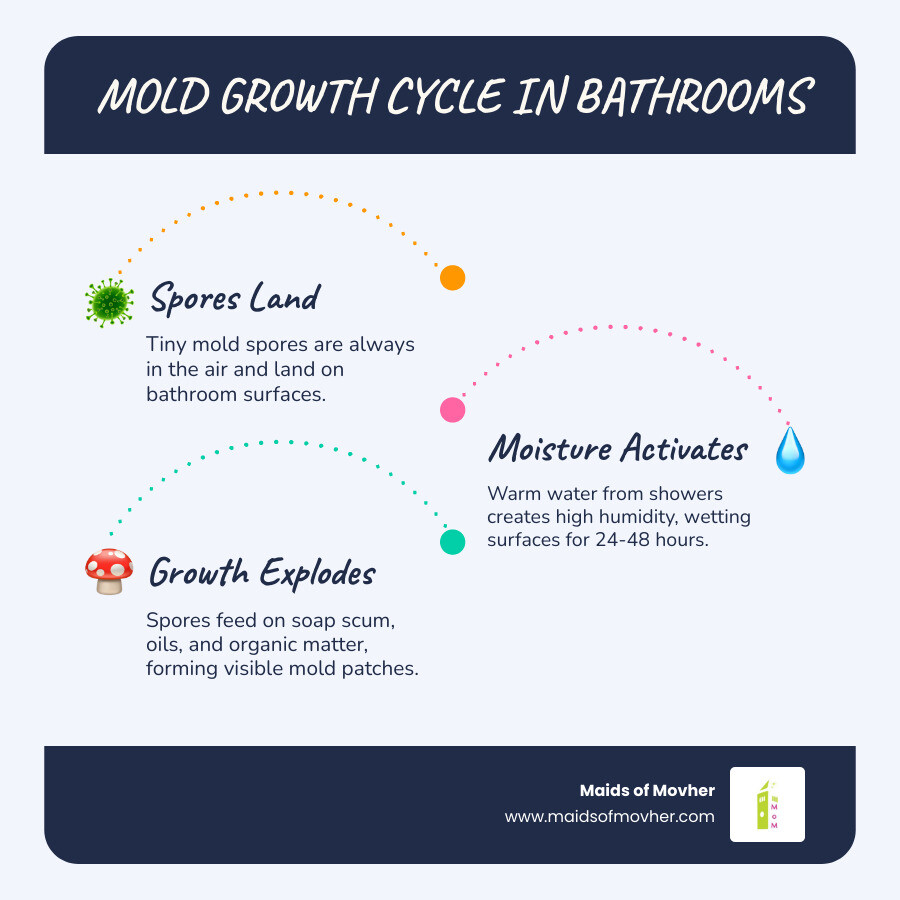
Before we can fight the fuzz, we have to understand why it’s there in the first place. Mold and mildew are types of fungi that reproduce through tiny, invisible spores floating in the air. These spores are always present, but they only start growing when they land on a wet surface that provides “food.”
In a bathroom, that food source is often organic matter like skin cells, body oils, and soap scum that builds up on tiles and shower curtains. When you combine those nutrients with high humidity and stagnant air, you create a microbial paradise.
It’s helpful to know the difference between the two common culprits:
| Characteristic | Mildew | Mold |
|---|---|---|
| Appearance | Flat, powdery, or “downy” | Fuzzy, slimy, or bumpy |
| Color | Usually white, gray, or yellowish | Black, green, red, or blue |
| Growth Pattern | Grows in a flat pattern on surfaces | Can grow deep into porous materials |
| Odors | Mildly musty | Strong, pungent, “earthy” smell |
The most critical thing to remember is the 24-48 hour window. Mold typically needs a surface to remain damp for about one to two days to take hold. If you can get your bathroom dry within that timeframe, you’ve won half the battle.
Master Ventilation to Prevent Mold and Mildew in Bathroom
Ventilation is your first and strongest line of defense. If you aren’t moving that steam out of the room, it’s going to settle on your ceiling and walls, eventually leading to growth.
The Power of the Exhaust Fan
A high-quality exhaust fan is essential. However, many homeowners don’t use them correctly. To effectively remove moisture, you should run the fan during your shower and for at least 30 minutes afterward. This ensures that the heavy, humid air is fully swapped out for drier air. If you find it hard to remember, consider installing a timer switch so the fan shuts off automatically.
When choosing a fan, pay attention to the CFM (Cubic Feet per minute) rating. A good rule of thumb for standard 8-foot ceilings is to multiply your square footage by 1.1. For 9-foot ceilings, multiply by 1.5. This ensures the fan is powerful enough to actually clear the room. Also, make sure your fan vents to the outside of your home, not just into the attic, which can cause structural rot and mold issues elsewhere.
How to prevent mold and mildew in bathroom without an exhaust fan
Living in an older home in Spokane or Liberty Lake without a built-in fan? You aren’t doomed to a moldy fate, but you do have to be more intentional.
- Open the Windows: Even cracking the window an inch during a shower can help. If weather permits, open it fully afterward to let the steam escape.
- Create Cross-Ventilation: Leave the bathroom door open (even just a gap) to allow air from the rest of the house to circulate.
- Use Portable Fans: A small desk fan pointed toward the shower area can help move air and dry surfaces faster.
- Humidity-Absorbing Plants: Certain plants like Boston Ferns or Peace Lilies thrive in humid environments and can naturally absorb a small amount of moisture from the air.
Daily Habits for Moisture Control and Surface Drying
Consistency is the secret sauce. If we wait until the weekend to deal with moisture, the mold has already had five days to settle in.
The Squeegee Method
One of the most effective tools in your arsenal is a simple squeegee. After every shower, take 30 seconds to squeegee the water off the glass doors and tiles. This removes the majority of the standing water that would otherwise take hours to evaporate. If you don’t like squeegees, a microfiber cloth works just as well to wipe down the tub and fixtures.
Manage Your Textiles
Wet towels and bath mats are major mold magnets.
- Stone Bath Mats: We highly recommend switching from fabric mats to stone bath mats made of diatomaceous earth. These mats absorb water instantly and dry within minutes, leaving no place for mold to grow.
- Hang it Up: Never leave a damp towel bunched up on the floor or a hook. Spread it out over a towel bar so air can reach both sides.
- Shower Curtains: Always pull the shower curtain closed after use so it doesn’t stay bunched up and wet in the folds. If you use a liner, make sure it stays inside the tub to drain.
Daily Moisture-Reduction Steps
- Squeegee walls and doors immediately after showering.
- Wipe down the sink and faucet handles.
- Remove wet washcloths or loofahs from the shower and hang them to dry elsewhere.
- Open the bathroom door wide once you’re finished getting ready.
Best Cleaning Methods and Products to Prevent Mold and Mildew in Bathroom
Regular cleaning kills spores before they can form visible colonies. While bleach is a common “go-to,” it isn’t always the best choice for porous surfaces like grout because it can actually leave moisture behind while only “bleaching” the color of the mold rather than killing the roots.
We prefer more natural, effective alternatives:
- Distilled White Vinegar: Its high acidity makes it a nightmare for mold. Spray it liberally on surfaces and let it sit for 10-15 minutes before wiping.
- Hydrogen Peroxide: This is a great antifungal and antibacterial agent. It’s particularly effective at bubbling mold out of grout lines.
- Baking Soda Paste: For stubborn spots, mix baking soda and water into a paste. This provides a gentle abrasive that scrubs away organic matter without scratching your tiles.
- Botanical Cleaners: Look for cleaners containing thymol (derived from thyme oil), which are highly effective and safe for families and pets.
To keep things truly sparkling, consider everything-you-need-to-know-about-recurring-bathroom-cleaning-services. Having a professional team come in regularly ensures that those hard-to-reach nooks and crannies—like behind the toilet or the top of the shower surround—stay mold-free.
How to prevent mold and mildew in bathroom using humidity regulation
If your bathroom consistently feels like a sauna, you might need to monitor the air itself.
- Hygrometers: These are inexpensive devices that measure humidity. You want to keep your bathroom (and home) between 30 and 50 percent humidity.
- Dehumidifiers: If you live in a particularly damp area or have a basement bathroom, a small dehumidifier can work wonders. Some even come with pumps so you don’t have to empty the water tank manually.
- Cooler Showers: We know, a steaming hot shower feels great, especially during a Spokane winter. But cooler showers produce significantly less steam, which translates to less mold risk.
Long-Term Maintenance: Grout, Paint, and Repairs
Sometimes, prevention requires a bit of DIY home maintenance. Mold loves to hide in cracks where water can seep behind the scenes.
Seal Your Grout
Grout is naturally porous. Over time, the sealant wears off, allowing water to soak in. We recommend resealing your grout annually. This creates a waterproof barrier that keeps mold from growing inside your walls. If you see hairline cracks in your grout, repair them immediately with a small amount of matching caulk or grout.
Choose the Right Paint
When it’s time to refresh your bathroom, don’t just use standard interior paint. Opt for mold-resistant or antimicrobial paint. These formulas contain fungicides that prevent spores from taking hold on the surface. High-gloss or satin finishes are also better than flat paint because they are less porous and easier to wipe down.
Check for Leaks
A slow drip under the sink or a leaky showerhead can provide the constant moisture mold needs to thrive. Check your cabinets weekly for dampness and ensure your toilet tank isn’t sweating or leaking onto the floor.
When to Call a Professional for Mold Issues
While we love a good DIY hack, there are times when you need to call in the experts.
The EPA suggests that if the moldy area is larger than 10 square feet (roughly a 3 ft. by 3 ft. patch), you should hire a professional. Large-scale mold remediation requires specialized equipment and high-level PPE, including N-95 respirators, goggles, and gloves, to prevent you from inhaling dangerous levels of spores.
You should also seek professional help if:
- Mold keeps coming back despite your best cleaning efforts (this often indicates a leak behind the wall).
- You notice structural damage, like soft spots in the drywall or floor.
- Family members are experiencing unexplained respiratory issues or chronic headaches.
Frequently Asked Questions about Bathroom Mold
How do I prevent mold on bathroom ceilings and walls?
Ceilings are often the first place mold appears because steam rises. Ensure your exhaust fan is working correctly and consider applying a waterproof coating or mold-resistant paint. After a particularly steamy shower, use a microfiber mop to quickly wipe the ceiling dry.
What are safe methods to remove existing mold and mildew?
Spray the area with straight white vinegar or a 3% hydrogen peroxide solution. Let it sit for at least 10 minutes, scrub with a soft brush, and rinse. Never mix bleach and vinegar, as this creates toxic chlorine gas. Always ensure the room is well-ventilated while cleaning.
What common mistakes lead to recurring mold?
The biggest mistake is painting or caulking over mold. This doesn’t kill it; it just hides it while the mold continues to eat away at the material underneath. Other mistakes include leaving wet towels in a heap and failing to clean the bathroom exhaust fan cover, which can get clogged with dust and lose its efficiency.
Conclusion
At the end of the day, learning how to prevent mold and mildew in bathroom areas is about being proactive. By mastering your ventilation, keeping surfaces dry, and staying on top of small repairs, you can keep your bathroom a fresh, relaxing oasis rather than a science project.
At Maids of Movher, we are proud to be Spokane’s local, woman-owned choice for residential cleaning. We care about our community in Spokane Valley, Mead, and Liberty Lake, and we want to help you maintain a home that is as healthy as it is beautiful. Whether you need a deep scrub to get things back on track or recurring maintenance to keep the fuzz away for good, our happy, well-paid professionals are here to help.
Looking for professional help? Check out our Washington cleaning services complete guide
